Home › FX Trading School › Pro
Trading the London Open: A Pro Execution Playbook
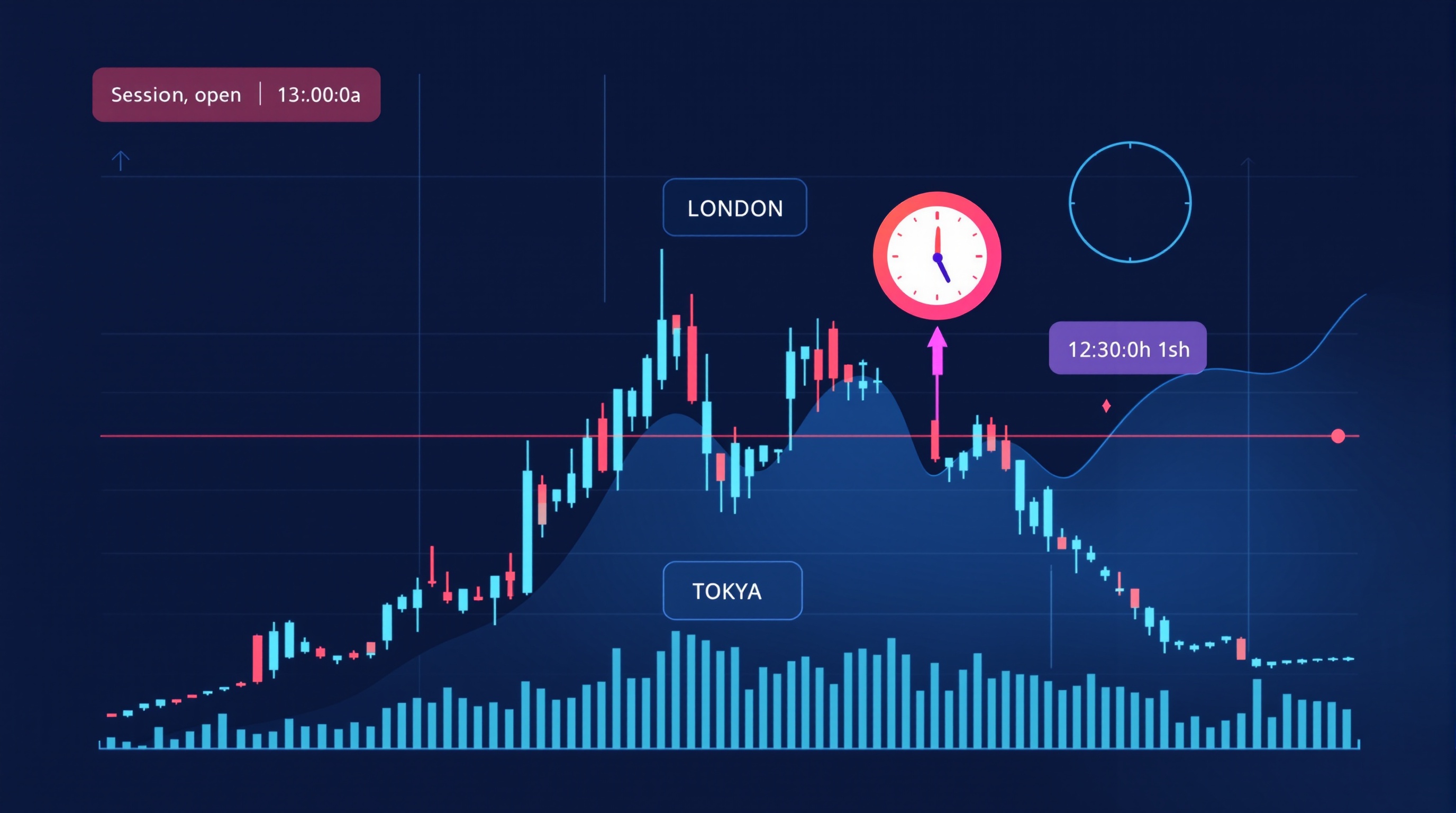
Trading the London open is one of the first execution skills serious FX traders try to master, because no other hour of the day reshapes liquidity, spreads, and volatility quite so quickly. This lesson assumes you've already worked through the earlier modules on session overlaps and spread costs — if "liquidity provider" or "spread widening" are new terms to you, go back to those before tackling this one, because here we're focused purely on execution mechanics.
Why the London Open Behaves Differently
London is the largest FX trading centre in the world by volume, and its open (broadly 07:00–08:00 UK time) is where the tail of the Asian session hands over to a much deeper pool of liquidity providers. That handover isn't smooth or instant. In the space of 15–30 minutes you typically see:
- A volume surge as European desks, funds, and corporate flow come online
- Short-term spread widening as market makers reprice and adjust quotes
- A burst of directional moves as overnight Asian ranges get tested or broken
- Increased false breaks, where price pokes through a level and snaps back
None of this is unique to any one pair — it affects USD/JPY and AUD/USD almost as much as EUR/USD and GBP/USD, because it's a liquidity event, not a currency-specific one. Traders who don't respect this transition often get caught either chasing a move that immediately reverses, or entering during the worst part of the spread widening. Treat the first 15–30 minutes after the open as a distinct regime with its own rules, not just "the market, but faster."
Reading the Open Before Acting on It
The single most common mistake at pro level isn't a bad idea — it's collapsing analysis and execution into one impulsive click. Separate the two explicitly:
1. Mark the pre-London range. Note the high/low formed during the last hour of Asian trading. 2. Watch the first candle or two after 07:00, without trading. Is price expanding, or is it a false poke through the range? 3. Confirm, don't guess. A break of the pre-London range with follow-through volume is a different signal to a single wick that immediately reverses. 4. Only then decide on entry mechanics — market order, limit order, or waiting for a retest.
This reading phase costs you nothing but patience, and it's the main thing separating a disciplined open trade from a coin flip. If you find yourself entering within the first 60 seconds of the session, ask whether you actually confirmed anything or just reacted to the first big candle.
Order Types and Slippage Risk
Because spreads and short-term volatility both spike around the open, your order type choice matters more here than at almost any other time of day.
| Order type | Behaviour at the open | Main risk | |---|---|---| | Market order | Fills immediately | Can fill at a widened spread or with slippage | | Limit order | Fills only at your price or better | May not fill if price runs away | | Stop-limit | Triggers on a break, fills within a defined range | Can miss fast moves entirely |
There's no single "correct" choice — it depends on your strategy and risk tolerance. Many pro traders default to limit orders with a small buffer around the open specifically to avoid paying the worst of any temporary spread widening. Others accept market-order slippage as a cost of being in a genuine breakout early. What matters is that you choose deliberately and test it, rather than defaulting to whatever your platform does out of habit.
Broker Execution Differs — Check, Don't Assume
Execution quality at the London open is not uniform across brokers, account types, or even servers. As a concrete example: Pepperstone runs multiple MetaTrader server environments, and IG offers both its own platform and MetaTrader access — the underlying liquidity and pricing behaviour around 07:00–08:00 London time can differ between these setups even for the same underlying pair. This isn't a criticism of either broker; it's simply how FX liquidity provision works.
Before you build a London-open strategy around a specific account:
- Log your own fill quality (requested price vs filled price) for a week of opens
- Note whether spreads widen briefly, stay wide, or barely move on your setup
- Compare across account types if your broker offers more than one
- Never assume last month's spread behaviour still holds — liquidity conditions shift
This is exactly what the [PipTax cost tool](/audit.html) is built for: feeding in your actual trade data and seeing the real cost impact of your execution around specific sessions, rather than relying on generic spread tables that may not reflect current conditions.
A Practical London Open Checklist
Use this as a pre-session routine, not a rigid rulebook:
- 07:00 — Mark the pre-session high/low; do nothing else
- 07:00–07:15 — Watch price action; note volume and whether the range holds or breaks
- 07:15–07:30 — If a break is confirmed with follow-through, decide entry method (limit vs market)
- Before entering — Check your spread via your platform's dealing ticket; if it's clearly wider than your typical average, factor that into your stop and target
- After the trade — Log the entry price, requested vs filled price, and outcome, so you build real data on your own execution over time
This routine won't remove risk, but it forces a pause between "the market moved" and "I acted," which is where most costly open-session mistakes happen.
Common Mistakes at the London Open
Even experienced traders fall into a handful of repeatable traps:
- Trading the very first candle without waiting for confirmation
- Ignoring spread cost in stop-loss placement, effectively trading with a tighter real stop than intended
- Assuming every break is genuine — false breaks are common precisely because liquidity is still forming
- Using the same position size as a calmer session, when volatility (and therefore risk per trade) is genuinely higher
- Not reviewing broker-specific execution data, and instead relying on forum anecdotes about "broker X always widens spreads"
Trading the London open rewards patience and process far more than speed. It's an execution skill, built on the session-timing and cost-awareness fundamentals from earlier in this course, and it's worth practising in a demo environment before sizing up. For a fuller sense of how session timing interacts with your actual trading costs, the [cost-impact page](/cost-impact.html) and [broker comparison pages](/brokers/index.html) are good next stops — and remember that all forex trading carries risk of loss, London open or otherwise.
Key takeaways
- The London open (07:00–08:00 UK time, ramping into the 08:00 fix) brings the sharpest liquidity and spread changes of the trading day — treat the first 15-30 minutes as a distinct execution regime, not a normal market
- Spreads often widen briefly at the open before compressing as London liquidity providers come online; check this behaviour on your own broker rather than assuming it
- A pro approach separates 'reading' the open (range, direction, volume) from 'acting' on it (entry method, order type, stop placement) — don't collapse the two into one impulsive decision
- Stop hunts and false breaks are common in the first 15 minutes; waiting for a confirmed range break reduces (not eliminates) this risk
- Compare your broker's actual execution at 07:00-08:00 London time using the PipTax cost tool rather than relying on generic spread tables
- This lesson builds on session-overlap timing and spread-cost basics from earlier modules — revisit those if the terms are unfamiliar
Frequently asked questions
- What time does the London forex session actually open?
- The London session is generally taken to start at 07:00 UK time (08:00 in winter for continental Europe, though UK clocks set the convention), with the London 4pm fix being the other well-known London-specific event. Most of the volatility traders mean by 'the London open' happens between 07:00 and 08:00 UK time, as European desks come online and the overlap with the tail of the Asian session builds liquidity.
- Why do spreads widen at the London open?
- Liquidity providers reprice as new volume and information arrive, and the handover from Asian to European liquidity pools isn't instant. Spreads can briefly widen before compressing again as more market makers quote. This varies by broker and instrument, so check your own execution data via the cost tool rather than assuming a fixed number.
- Is trading the London open good for beginners?
- No — this is a Module 12 (Execution) topic aimed at traders who already understand session timing, spread costs, and order types. The London open moves fast and punishes hesitation and poor order placement; beginners are better served mastering calmer sessions first.
- Should I use market orders or limit orders at the London open?
- Many pro traders prefer limit or stop-limit orders around the open specifically because market orders can suffer slippage during the initial spread widening. There's no universal rule — test both approaches in a demo account with your actual broker before committing real size.
- Does the London open matter if I trade currency pairs without GBP or EUR?
- Yes. The London open affects overall market liquidity and volatility, not just GBP or EUR pairs, because London is the world's largest FX trading centre and its desks are active across almost all major and cross pairs.