Home › FX Trading School › Intermediate
Scalping vs Day Trading vs Swing Trading Explained
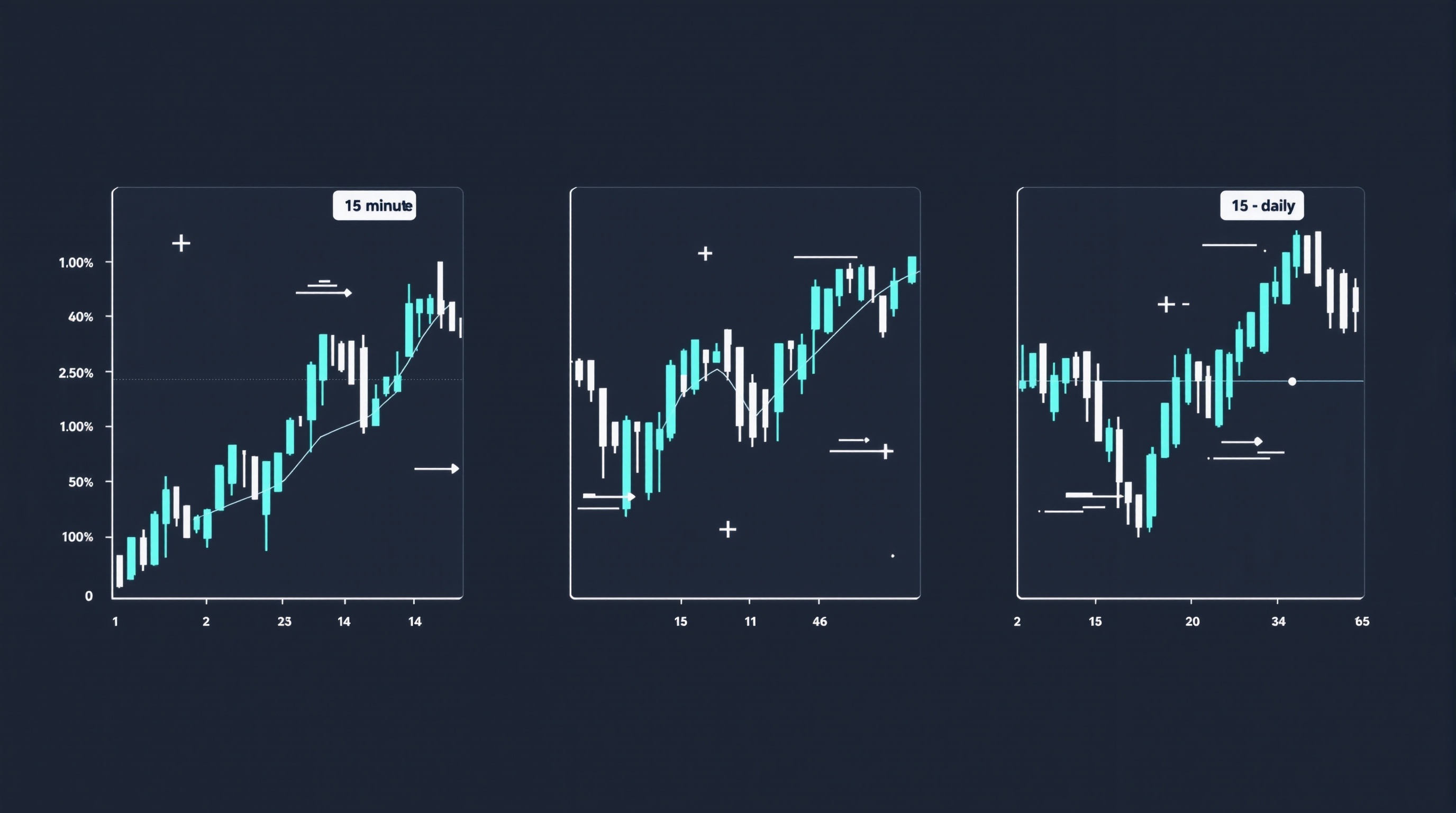
Scalping vs day trading vs swing trading is really a question about time, not talent: each style asks you to hold a trade for a different length of time, and that single choice changes almost everything else about how you trade. This lesson builds on Module 9's cost-of-trading work — if you haven't yet worked through how spread, commission and swap eat into results, do that first, because costs affect each style very differently.
What Actually Separates the Three Styles
The core difference is holding time, and everything else follows from it.
- Scalping — trades last seconds to a few minutes. You might place dozens of trades a day, each aiming for a handful of pips.
- Day trading — trades last minutes to hours, but everything is closed before the trading session ends. No overnight exposure.
- Swing trading — trades last from a few days to a few weeks, riding a larger move and accepting overnight and weekend risk.
None of these is inherently "better." They're different jobs with different tools. A scalper needs fast execution and razor-thin costs. A swing trader needs patience and a tolerance for seeing an open position sit through news events while they're asleep.
It's worth being honest here: whichever style you pick, most retail traders lose money over time. Style choice doesn't fix a lack of edge, risk control or discipline — it just changes the shape of the challenge you're taking on.
Scalping: Fast, Frequent, Cost-Sensitive
Scalping means taking many small trades, often on 1-minute or tick charts, aiming to bank a few pips before closing out.
What it demands: - Full, uninterrupted screen focus for the session — no distractions - Extremely tight spreads and low commission, since costs are paid on every single trade - Fast, reliable execution — slippage of a pip or two can wipe out a scalp's entire target - A broker and account type genuinely built for frequent trading
Because you're trading so often, cost drag compounds fast. A spread that looks tiny on one trade becomes meaningful across 30 trades a day. This is exactly why checking your real all-in cost per trade matters more for scalpers than any other style — run your typical scalp size through the [cost tool](/audit.html) before assuming a strategy is profitable on paper.
Scalping suits people with fast reflexes, calm nerves under repetition, and no tolerance for wandering attention. It doesn't suit anyone who can't watch the screen properly for the whole session.
Day Trading: One Session, No Overnight Risk
Day trading sits between the two extremes. You open and close positions within a single trading day, so you never carry a position overnight.
Typical day trading habits: - Trading off 5-minute to 1-hour charts - Fewer trades than scalping — perhaps 1 to 10 a day - A defined session window (e.g. London open, or the New York/London overlap) - Everything flat before you log off, no swap charged
Day trading avoids overnight and weekend gap risk entirely, which appeals to traders who don't want to wake up to a surprise. It still needs meaningful screen time, though — a few solid hours, not a five-minute check between meetings.
Whether you trade on IG's own platform or through Pepperstone's MetaTrader servers, the mechanics of day trading are the same: watch the session, manage the trade actively, close it out. What differs between brokers is execution speed and cost structure, which is worth confirming directly on the [brokers page](/brokers/index.html) rather than assuming.
Swing Trading: Holding Through the Noise
Swing trading holds positions for several days to a few weeks, aiming to capture a larger directional move rather than a quick pip target.
What swing trading involves: - Charts typically on the 4-hour or daily timeframe - Far fewer trades — sometimes just a handful a month - Overnight and weekend exposure, meaning open positions sit through news you can't react to instantly - Swap/rollover charges instead of frequent spread costs
This is usually the most forgiving style for people with day jobs, since it needs checking in once or twice a day rather than constant monitoring. But "less time-consuming" doesn't mean "less risky." A held position can move sharply against you overnight with no chance to react until you're back at the screen.
Swing traders should pay close attention to swap rates, particularly on pairs held over several days — check current rates on the [rates page](/rates.html) rather than guessing, since swap can quietly become a bigger cost than spread ever was.
Comparing Costs and Time Commitment
Here's a rough side-by-side to make the trade-offs concrete:
| | Scalping | Day Trading | Swing Trading | |---|---|---|---| | Holding time | Seconds–minutes | Minutes–hours | Days–weeks | | Trades per week | Dozens+ | Several | A handful | | Main cost driver | Spread/commission | Spread/commission | Swap/rollover | | Overnight risk | None | None | Yes | | Screen time needed | Constant, intense | Session-length | Brief, daily check-ins |
This table is a starting point, not a rulebook — your own numbers will vary by broker, pair and account type. That's exactly what the [cost tool](/audit.html) is for: plug in your actual trade size and frequency and see which style your real costs favour.
Choosing the Style That Fits Your Life
Before picking a style, be honest about your actual circumstances, not the trader you'd like to be.
Ask yourself: - How much uninterrupted time do I realistically have? Scalping needs constant attention; swing trading doesn't. - Can I emotionally handle overnight risk? If unexpected news makes you anxious, day trading or scalping may suit you better than swing trading. - What's my account size? Very small accounts often struggle with scalping once costs are factored in — the [methodology page](/methodology.html) explains how account size interacts with cost impact. - Do I have fast, reliable execution? Scalping without it is a losing proposition before you've even opened a chart.
There's no shame in choosing the slower, less exciting style. Many consistent traders swing trade precisely because it removes the pressure of split-second decisions.
Conclusion: Match the Style to Your Costs and Life
Scalping vs day trading vs swing trading isn't a contest to find the "best" approach — it's about matching a style's demands to your time, temperament and true trading costs. Work through Module 11 next, where we build a trading plan around whichever style you've chosen, and keep testing real numbers through the [cost tool](/audit.html) rather than relying on assumptions.
Key takeaways
- Scalping, day trading and swing trading are defined by holding time, not by how much money you make
- Scalping needs the tightest costs and fastest execution because you trade the most often
- Day trading sits between the two, closing everything before the session ends
- Swing trading holds positions for days, so swap charges matter more than spread
- Your personality, screen time and account size should choose your style, not the other way round
- Always run your real trade size through the cost tool before committing to a style
Frequently asked questions
- Which trading style is best for beginners?
- Most trading schools, including this one, suggest starting with swing trading or slower day trading. Scalping demands split-second execution and very low costs to be viable, which is a harsh environment to learn in. Swing trading gives you time to think between decisions while you build habits like journalling and risk sizing.
- Do I need a different broker for scalping vs swing trading?
- Not necessarily a different broker, but you do need to check the account terms. Some brokers restrict scalping on certain account types or widen spreads around news. Check execution type, minimum stop distances and any scalping-specific rules on your broker's page, and confirm live costs with the cost tool before switching styles.
- Can I mix scalping, day trading and swing trading?
- Yes, many traders do, often using separate accounts or clearly logged strategies so results don't get muddled. But mixing styles without a plan usually means mixing costs and mistakes too. If you combine them, track each style's performance separately in your journal.
- Does swing trading avoid trading costs altogether?
- No. Swing trading trades spread and commission for swap charges, since positions are held overnight. Over several days or weeks, swap can add up to more than the spread would have cost on a same-day trade, so it still needs checking, not ignoring.
- How much time do I need for day trading?
- Day trading typically needs a few uninterrupted hours to watch the market, enter, manage and close trades within the session. If you can't commit that time regularly, swing trading, which checks in once or twice a day, usually fits real life better.