Home › FX Trading School › Advanced
Record-Keeping & Tax Awareness for UK Traders
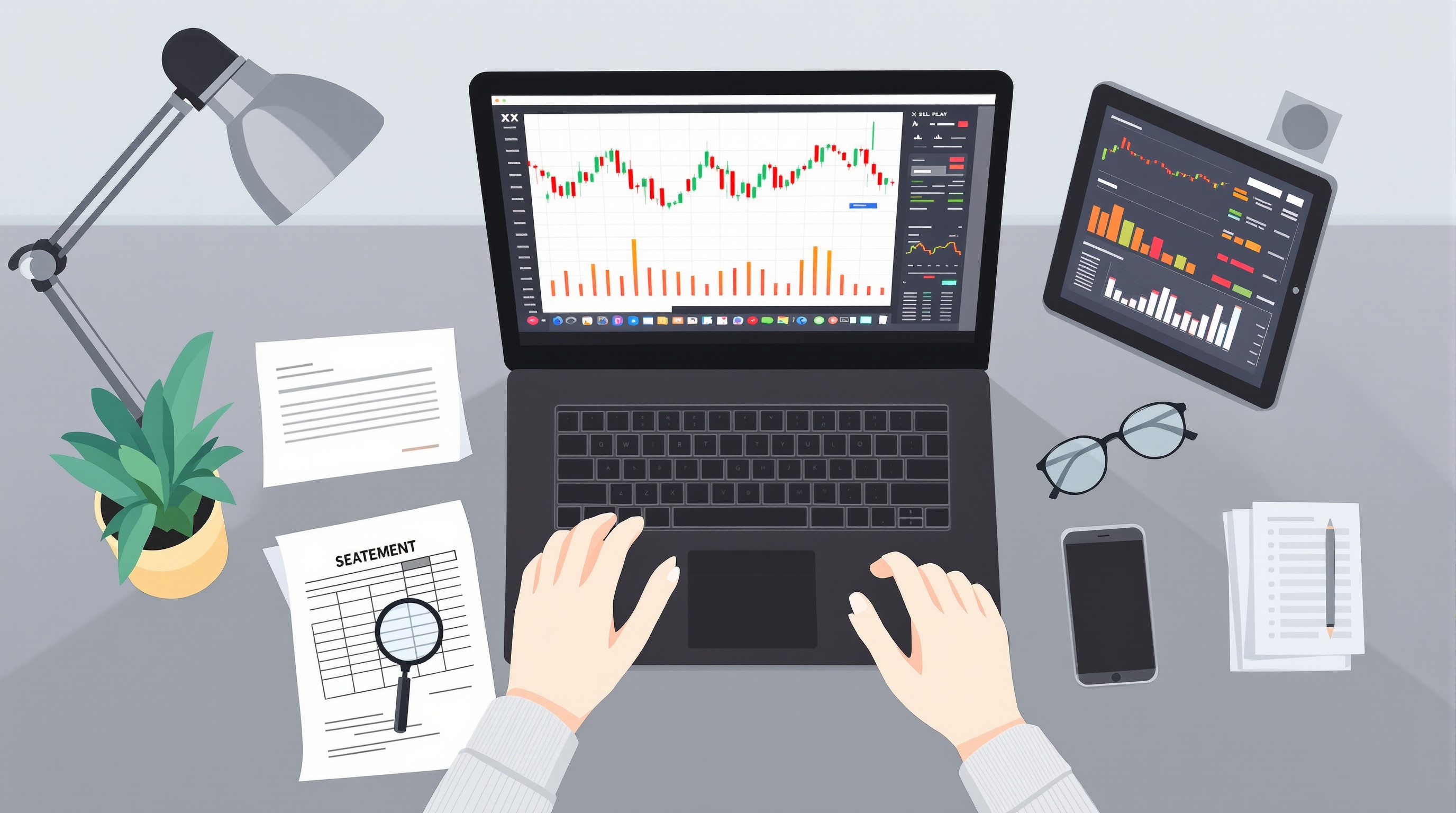
Good record-keeping for UK traders isn't a chore you do in a panic every April — it's a discipline you build into every trading session, the same way you log entries and exits. This lesson is Module 20 of PipTax FX Trading School, the final "Mastery" module, and it assumes you're already comfortable with the cost-tracking habits from Module 12 and the platform reconciliation drill from Module 15. If those feel shaky, go back before continuing — everything here builds on that foundation.
One thing up front: this is not tax advice. Tax treatment of trading activity in the UK depends on your personal circumstances, the instruments you use, and current HMRC rules, which can change. Nothing in this lesson should be taken as a recommendation for your specific situation — speak to a qualified accountant or check HMRC's own guidance directly.
Why Record-Keeping for UK Traders Matters at This Stage
By the time you reach an advanced stage, you're likely trading across more than one account, possibly more than one broker, and probably more than one instrument type — spot FX, CFDs, maybe spread betting. That complexity is exactly why sloppy records catch up with people. A trader who's fine keeping mental notes on ten trades a month falls apart at two hundred.
The practical risks of poor records:
- You lose the ability to reconstruct your own history. If HMRC ever asks questions, or you simply want to know your true year-on-year performance, gaps in your log make this painful or impossible.
- You can't separate skill from cost. Without clean records, a losing month gets blamed on "bad trading" when it was actually spread and swap drag — a distinction Module 12 covers in depth.
- You lose leverage in broker disputes. A mismatched fill, a slippage complaint, or a platform outage claim is far stronger with your own timestamped log to compare against the broker's statement.
Treat this as an operational requirement of running a trading account, not paperwork bolted on afterwards.
What to Log for Every Trade
At minimum, your own trade log — kept independently of any broker platform — should capture:
1. Date and time of entry and exit (note the timezone your broker uses; MetaTrader servers commonly run on a fixed offset that isn't your local time). 2. Instrument and direction (e.g. EUR/USD, long). 3. Size (lots or units). 4. Entry and exit price, plus any partial closes. 5. Spread or commission paid, recorded separately from price movement. 6. Swap/rollover charges if the position was held overnight. 7. Account and broker the trade was placed through. 8. Reason for the trade — brief, but useful later for reviewing your own decision quality.
Export this from your platform where possible rather than retyping it — both Pepperstone's MetaTrader environment and IG's own platform offer downloadable trade history, and starting from an export reduces transcription errors.
Reconciling Broker Statements Into One Master Log
If you use more than one broker, you'll quickly notice the statements don't look alike. Pepperstone's MetaTrader reports and IG's own-platform statements structure data differently — different column orders, different ways of showing swap and commission, different date formats.
A simple reconciliation workflow:
- Export monthly, even if you don't need it yet — waiting until year-end risks losing access to older history.
- Normalise into one spreadsheet format — same columns, same date format, regardless of source broker.
- Cross-check totals — does your master log's total P&L match the broker statement's total for that period? If not, find the discrepancy before moving on.
- Flag anything unusual — a fill far from your expected price, an unexpected fee line, a swap that looks off.
This is the same reconciliation habit from Module 15, just now applied across multiple accounts and, potentially, multiple years.
Costs Deserve Their Own Line, Not a Blend
A common mistake among traders who otherwise keep decent records: lumping spread, commission, swap and slippage into one vague "fees" figure, or worse, letting them disappear invisibly into the P&L number.
| Cost type | Where it shows up | Why track separately | |---|---|---| | Spread | Built into entry/exit price | Varies by instrument and time of day | | Commission | Separate line (common on ECN-style accounts) | Fixed or volume-based, easy to sum | | Swap/rollover | Charged for overnight holds | Can turn a flat trade negative over time | | Slippage | Difference between expected and actual fill | Signals execution quality, not market cost |
Separating these lets you see whether a strategy is genuinely unprofitable or whether costs are the real problem. PipTax's cost tool at /audit.html and the broader comparison work at /cost-impact.html are built for exactly this — pulling live spread and commission data so you can check your own logged costs against current broker terms rather than guessing.
Spread Betting vs CFDs: Know Which Records You're Keeping
UK traders often use both spread betting and CFD accounts, sometimes with the same broker, and the two are commonly treated differently for tax purposes in the UK. This distinction matters for your record-keeping because:
- The instruments may look similar on screen but sit in different regulatory and tax categories.
- Statements may not clearly label which account type a trade came from if you're consolidating exports.
- Your own log should always record account type as a field, not just broker name.
Again — how each is actually taxed depends on your circumstances and current HMRC rules; this is a record-keeping point, not a tax ruling. If you're unsure how your own accounts are categorised, check directly with your broker and, where relevant, a qualified adviser.
How Long to Keep Records and Where
HMRC generally expects self-assessment records to be kept for a minimum period after the relevant tax year — check current guidance for the exact figure, as retention requirements can be updated. Practically:
- Don't rely solely on broker portals for long-term storage — account closures, platform migrations, or Pepperstone/IG changing their statement systems can all limit how far back you can retrieve data.
- Keep your own exported copies in at least two locations (e.g. a cloud drive and a local backup).
- Store statements alongside your master log, not instead of it — the raw statement is your evidence; your log is your working analysis.
- Review annually even if nothing's wrong — an annual pass catches errors while they're still fixable.
Bringing It Together
Record-keeping for UK traders at an advanced level isn't about more spreadsheets for their own sake — it's about being able to answer, at any point, exactly what you traded, what it cost, and whether your edge survives those costs. Combine your own exported logs from brokers like Pepperstone and IG, reconcile them monthly, separate cost types clearly, and keep account types distinct given the different tax treatment of spread betting and CFDs. Use /audit.html to sanity-check your logged costs against live broker data, and /brokers/index.html if you're comparing account structures. None of this replaces proper tax advice — it just makes sure that when you do need it, your accountant has something usable to work with.
Key takeaways
- Record-keeping for UK traders is about building a clean, exportable history of every trade, cost, and account event — not a one-off task at year end.
- Spread betting is currently treated differently from CFD trading for UK tax purposes, but treatment depends on your individual circumstances — always confirm with HMRC guidance or a qualified accountant.
- Broker statements from Pepperstone (MetaTrader) and IG (own platform) use different formats — reconcile them into one master log so nothing gets missed.
- Track costs separately from raw P&L: spreads, commissions, swaps and slippage all need their own line so you can see true net performance.
- Keep records for at least the statutory minimum period, and store them somewhere durable — broker portals do not guarantee indefinite history access.
- This lesson builds on Module 12's cost-tracking framework and Module 15's platform reconciliation drill — revisit those if any step here feels unfamiliar.
Frequently asked questions
- Is this article tax advice?
- No. This is a record-keeping and workflow lesson for traders. Tax treatment depends on your personal circumstances and current HMRC rules — always confirm with HMRC guidance or a qualified accountant.
- Do I need to keep records if I only trade spread betting?
- Keeping clean records is good practice regardless of instrument type. Spread betting and CFDs are commonly treated differently for UK tax purposes, so your records should always clearly note which account type each trade came from.
- How often should I export my broker statements?
- Monthly is a practical rhythm. Waiting until year-end risks losing access to older history if a broker changes its statement system or you close an account.
- What's the difference between spread, commission, swap and slippage in my log?
- Spread is built into the entry/exit price, commission is a separate fee (common on ECN-style accounts), swap is an overnight holding charge, and slippage is the gap between your expected and actual fill price. Track each separately to see true net performance.
- Can I just rely on my broker's trade history instead of my own log?
- It's risky. Broker portals don't guarantee indefinite access to historical data, and formats differ between brokers like Pepperstone's MetaTrader reports and IG's own platform. Keep your own exported, reconciled master log as well.
- Where can I check if my trading costs match current broker terms?
- Use PipTax's cost tool at /audit.html and the comparison data at /cost-impact.html to check live spread and commission figures against what you've logged.