Home › FX Trading School › Pro
Liquidity, Order Blocks & Stop Hunts (Module 11)
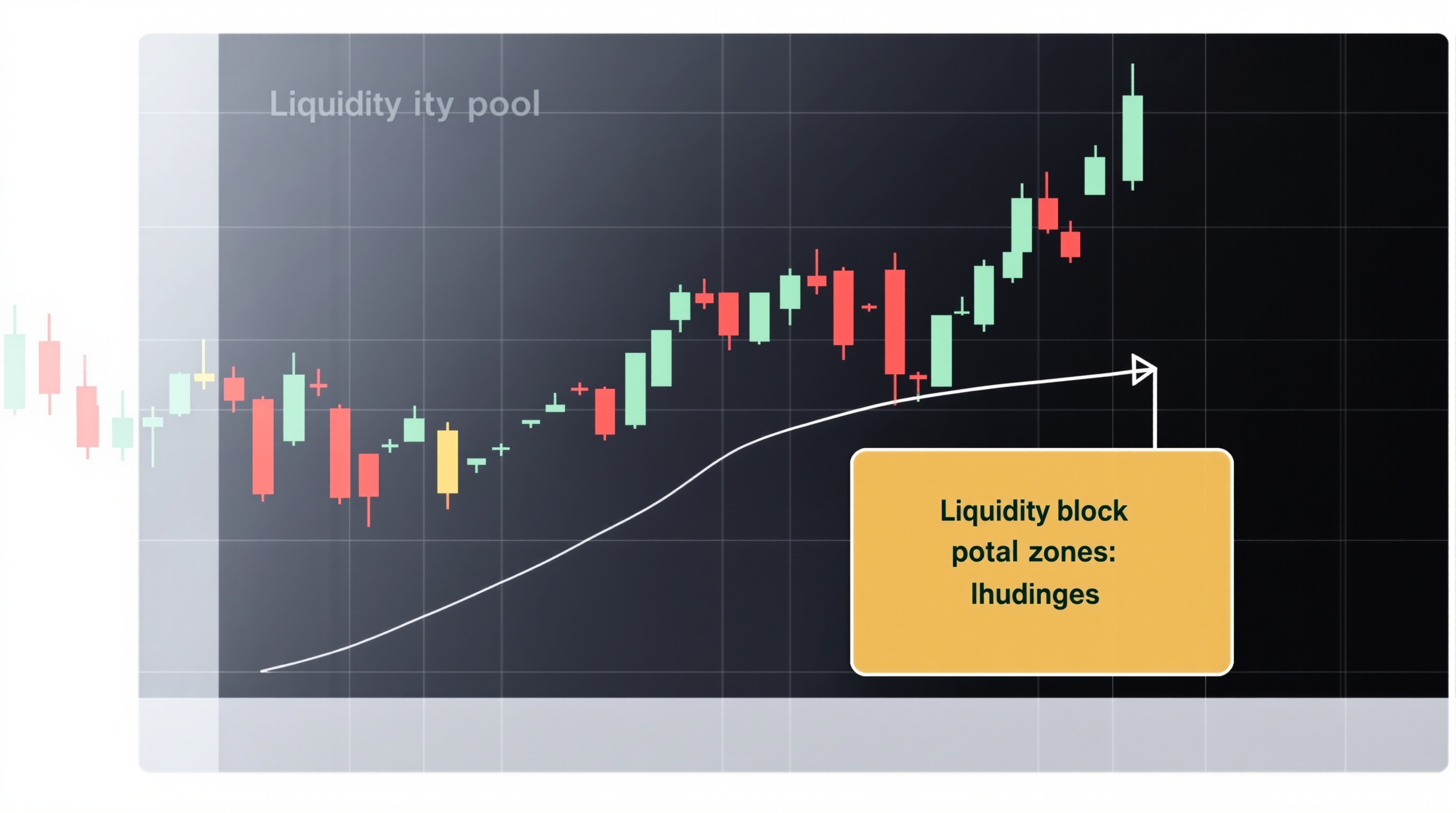
Understanding liquidity, order blocks and stop hunts is what separates traders who react to price with the crowd from those who understand why price moved in the first place. This is a Pro-level module — it assumes you've already worked through Module 10 on swing highs/lows and break of structure, because none of this makes sense without a clean structural map first.
This lesson won't promise you an edge that prints money. It won't. What it will do is explain, in plain terms, a real mechanic of how markets clear orders — so you stop getting caught on the wrong side of obvious moves.
What "liquidity" actually means in FX
Liquidity, in this context, isn't the textbook definition of "how easily an asset trades." It means resting orders — stop-losses, pending buy/sell-stops, and breakout entries — sitting at identifiable price levels.
Common liquidity pools include:
- Equal highs or equal lows — multiple swing points at nearly the same price, where breakout traders place stops just beyond
- Session highs/lows — the high or low of the Asian, London or New York session
- Round numbers — levels like 1.2500 or 150.00 where retail orders cluster
- Prior day/week highs and lows — widely watched by both retail and institutional participants
Large orders need a counterparty. A big buyer often needs sellers to fill their size, and one efficient place to find concentrated selling is just above a cluster of buy-stops (breakout traders) and sell-limits. When price runs into that pool, it triggers those orders, offering liquidity for the larger participant to build or exit a position — then price frequently reverses. That reversal is what retail traders call a "stop hunt."
Stop hunts: mechanism, not malice
It's tempting to think a stop hunt means someone is targeting your specific stop-loss. With FCA-regulated brokers such as Pepperstone or IG, that's not how retail execution works — your stop sits in the broker's system or gets routed per their execution model, but the price move itself is a market-wide phenomenon, not a bespoke attack on your account.
What actually happens:
1. Price approaches an obvious level (equal highs, session high, round number) 2. Breakout traders' pending orders and other traders' stop-losses sit just beyond it 3. Price pushes through, triggering those orders 4. Once that liquidity is absorbed, there's often nothing left to sustain the move, so price reverses
The practical lesson: don't place your stop-loss at the *obvious* spot everyone else uses. Give it room beyond the level, or use structure (like the far side of a recent swing) rather than a round number a few pips away.
Order blocks: where the move actually started
An order block is the last opposing candle before a strong, impulsive move. In an uptrend impulse, look for the last bearish (down-close) candle before the rally — that's a bullish order block. In a downtrend impulse, it's the last bullish candle before the drop.
Why it matters: this zone is thought to be where larger participants entered positions before driving price away sharply. When price later returns to that zone (called mitigation), it can react — either continuing the original direction or, if the zone fails, reversing.
How to mark one, step by step:
1. Identify a clear, strong impulsive move (multiple candles, minimal pullback) 2. Find the last opposing candle immediately before that impulse began 3. Mark the full high-to-low range of that candle as your zone 4. Watch what price does when — or if — it returns to that zone later
Order blocks are a tool for building a watch list of zones, not an automatic entry signal. Combine them with liquidity context and confirmation.
Putting it together: a practical workflow
Here's a realistic sequence a Pro-level trader might follow, built on Module 10's structure work:
| Step | What you're doing | |---|---| | 1 | Mark recent swing highs/lows and current structure (Module 10) | | 2 | Identify obvious liquidity pools — equal highs/lows, session extremes | | 3 | Mark order blocks behind recent impulsive moves | | 4 | Wait for price to sweep a liquidity pool | | 5 | Look for confirmation — rejection candle, break of a minor structure level | | 6 | Enter only after confirmation, with a stop beyond the sweep's extreme |
The critical discipline: you trade the reaction, not the sweep. Entering the instant price touches a liquidity pool is guessing. Waiting for the market to show its hand — a clear rejection or shift in short-term structure — is trading.
Common mistakes at this stage
- Marking every candle as an order block. Only impulsive, decisive moves count — not every minor wiggle.
- Entering on the sweep itself rather than waiting for confirmation, which turns this into a coin flip.
- Ignoring the higher timeframe — a sweep on the 5-minute chart means little if it fights the 4-hour trend.
- Placing stops at the same obvious levels you've just learned the market likes to clear.
- Overtrading — liquidity sweeps happen constantly; not every one is tradeable or worth your risk.
Why execution cost matters more here
Because stop-hunt reversal entries are often tight — you're entering shortly after a sweep, with a stop not far beyond the extreme — your risk-reward is more sensitive to spread, slippage and commission than a wider swing trade. A few extra pips of spread on entry can meaningfully shrink your reward-to-risk ratio on this kind of setup.
Before trading this live:
- Check your actual spread and commission conditions using PipTax's [cost tool](/audit.html)
- Compare execution models across brokers on the [brokers directory](/brokers/index.html) — for example, Pepperstone's MetaTrader server offerings versus IG's own platform have different execution characteristics worth understanding
- Review how PipTax calculates these comparisons on the [methodology page](/methodology.html)
Conclusion: read structure, don't chase it
Liquidity, order blocks and stop hunts are a lens for understanding *why* price moves through obvious levels before reversing — not a magic entry signal. Used properly, on top of solid structure work from Module 10, this helps you avoid getting swept out yourself and gives you a framework for waiting on confirmation rather than guessing.
Trading is genuinely difficult, and most retail accounts lose money. Treat this module as a way to read the market more honestly, not as a shortcut. Head back to the [FX Trading School index](/school/index.html) to continue to Module 12, and use the cost tool before risking anything on a live account.
Key takeaways
- Liquidity, order blocks and stop hunts describe where resting orders cluster and how price often moves to fill them before reversing
- A stop hunt isn't a conspiracy against you — it's the market clearing resting orders (stops, pending entries) that sit at obvious levels
- Order blocks mark the last opposing candle before a strong impulsive move, and act as zones where institutions may have entered
- Trade the reaction after the sweep, not the sweep itself — wait for confirmation (rejection, break of structure) before entering
- This builds directly on Module 10's swing highs/lows and break-of-structure concepts — you need clean structure marked before liquidity concepts mean anything
- Execution costs (spread, slippage, commission) matter more on these tight, reactive entries — check them on the cost tool before committing a strategy live
Frequently asked questions
- Is a stop hunt the same as stop-loss hunting by my broker?
- No. In a genuine market context, a stop hunt is simply price reaching a level where many traders' stop-losses and pending orders are clustered (like just above an obvious swing high), triggering them and providing liquidity for larger players to enter. With FCA-regulated brokers like Pepperstone or IG dealing in real market or aggregated prices, this is a structural market feature, not your specific broker manually hunting your stop. Always check execution quality via the cost tool if you're unsure.
- How do I identify an order block on a chart?
- Look for the last down-close candle before a strong bullish impulsive move (a bullish order block), or the last up-close candle before a strong bearish impulsive move (a bearish order block). Mark the candle's full range as a zone. Price often returns to 'mitigate' this zone before continuing the original move — but not always, so it needs confirmation, not blind entry.
- Where should I look for liquidity pools?
- Common spots are equal highs or lows, obvious round numbers, the high/low of a trading session (London or New York open), and swing points from Module 10's structure. These are places where stop-losses and breakout orders naturally accumulate.
- Can I trade stop hunts and order blocks profitably as a beginner?
- You can learn the concept at any stage, but this is a Pro-level module because it requires solid groundwork in market structure, patience for confirmation, and disciplined risk management. Most retail accounts lose money trading forex — treat this as a way to read price better, not a shortcut to easy profits.
- Do spreads and slippage matter more with this style of trading?
- Yes. Because entries are often placed tight to a reaction zone, a wide spread or slippage on a stop-hunt reversal can materially change your risk-reward. Compare live spread and execution data for your broker using PipTax's cost tool before trading this setup with real money.