Home › FX Trading School › Beginner
Leverage and Margin for Beginners
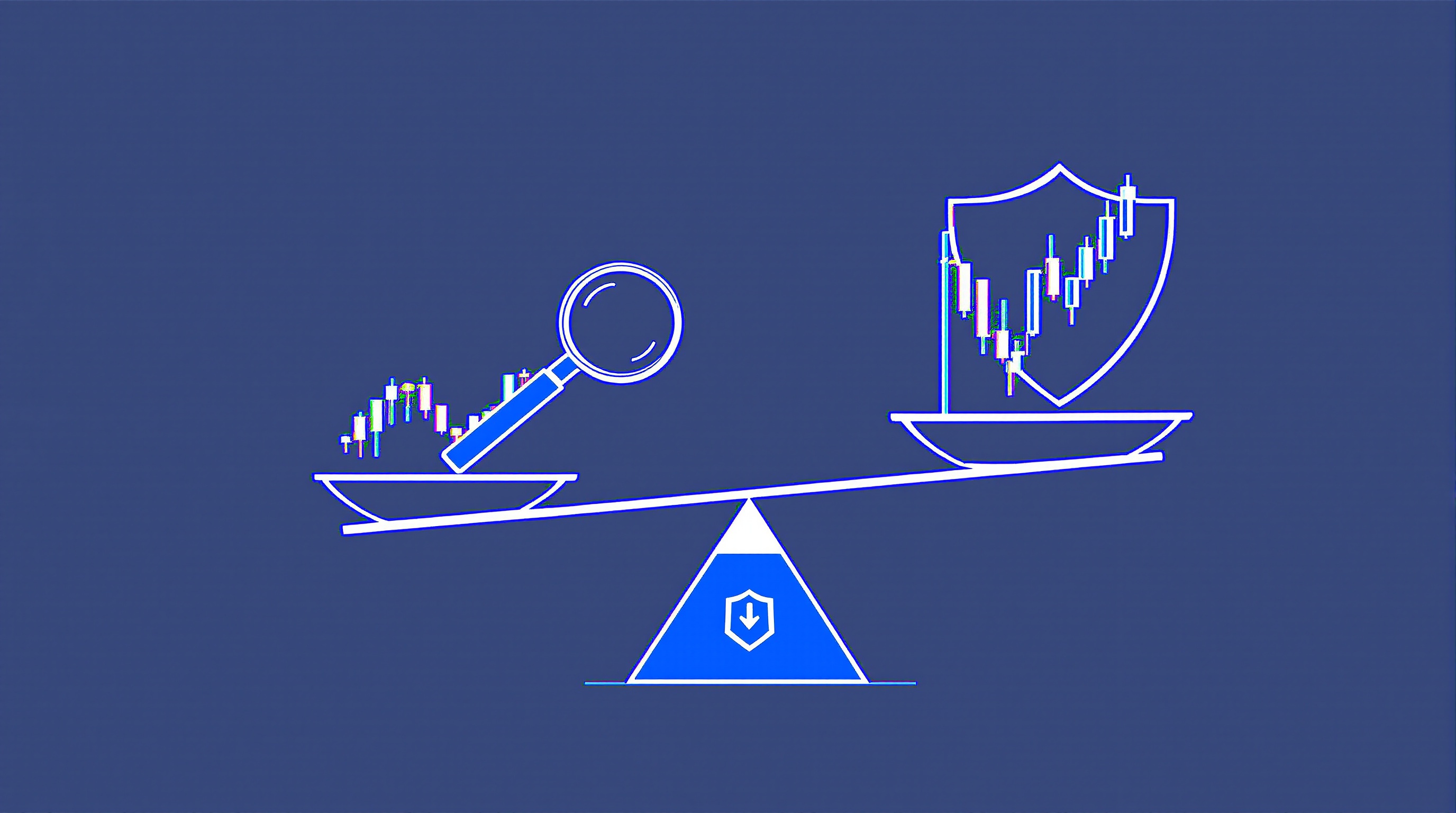
Understanding leverage and margin is the difference between trading with your eyes open and gambling with a spreadsheet. This lesson builds on Module 1's earlier concept of the pip and lot (if you haven't covered that yet, go back and do it first — everything here assumes you already know how a lot size translates into pounds per pip).
What leverage and margin actually mean
Leverage lets you control a larger position than your account balance would otherwise allow. Margin is the deposit your broker sets aside from your account to open and hold that position — it's not a fee, it's collateral.
- Leverage is expressed as a ratio, e.g. 30:1 or 100:1 (UK retail clients are capped by the FCA, typically up to 30:1 for major FX pairs).
- Margin is the cash your broker locks up, calculated as position size ÷ leverage.
- Notional value is the full size of the trade you actually control — this is what moves your P&L, not your margin.
Example: with 30:1 leverage, a £100,000 notional position (1 standard lot on many pairs) requires roughly £3,333 in margin. The other £96,667 is exposure you don't have to pay for upfront, but you're fully on the hook for its price moves.
This is the core beginner trap: leverage changes how much capital you *need*, not how much risk you're *taking*. Your risk is always tied to the full notional size, not the margin you put down.
How margin is calculated in practice
Every broker publishes a margin requirement per instrument, usually shown as a percentage (e.g. 3.33% = 30:1). The formula is simple:
`
Margin required = (Lot size × Contract size × Price) ÷ Leverage
`
For example, on a EUR/USD trade:
1. Take your lot size (say 0.5 standard lots = 50,000 units). 2. Multiply by the current price to get notional value in USD. 3. Divide by your leverage ratio to get margin in USD. 4. Convert to your account currency if needed.
Both Pepperstone and IG show this margin figure live on the deal ticket before you confirm a trade — check it every time, because margin requirements can differ between standard, professional, and specific instrument categories (indices, metals, and exotic pairs often carry higher margin than majors). Don't assume the ratio is the same across every symbol on the same account.
Margin level, free margin, and the margin call
Once you have open positions, three numbers matter constantly:
| Term | What it means | |---|---| | Used margin | Total margin locked across all open trades | | Free margin | Equity minus used margin — capital available to open new trades or absorb losses | | Margin level | (Equity ÷ Used margin) × 100 — the health check |
As losses grow, equity falls, free margin shrinks, and margin level drops. Brokers set two thresholds:
- Margin call level — a warning, often around 100%, where you can no longer open new trades.
- Stop-out level — often around 50%, where the broker starts closing positions automatically, starting with the largest loser, to protect both you and them.
These exact percentages differ by broker and account type — check Pepperstone's and IG's platform documentation or the deal ticket itself rather than assuming a number.
Why higher leverage doesn't mean higher profit
Higher leverage doesn't make a strategy more profitable — it just lets you open a bigger position with less capital, which magnifies both gains and losses proportionally. Two traders using the exact same stop-loss and entry can have wildly different outcomes purely because one used more leverage and therefore a larger position size relative to their account.
Common beginner mistakes:
- Maxing out available leverage because the platform allows it, not because the strategy needs it.
- Confusing margin available with money you can afford to lose — free margin is not risk capital, it's just what's not currently locked up.
- Ignoring correlation — holding EUR/USD and GBP/USD long simultaneously uses margin on both but concentrates real risk in one direction (US dollar weakness).
The fix is always the same: decide your risk per trade in pounds first, then work backwards to a position size and stop-loss — not the other way round.
A safer way to size positions using leverage and margin
Rather than asking "how much can I open?", ask "how much am I willing to lose?" This flips leverage and margin from a growth tool into a risk-management input.
1. Set a fixed risk per trade — commonly 0.5–2% of account equity for beginners. 2. Set your stop-loss distance in pips based on the chart, not on how much margin you have free. 3. Calculate lot size from risk ÷ (stop distance × pip value) — covered in the pip and lot lesson. 4. Check the margin required for that lot size on your broker's deal ticket. 5. Confirm free margin comfortably covers it, with room to spare for normal price fluctuation.
If the margin required for your risk-appropriate position size is tiny compared to your free margin, that's normal and healthy — it means leverage is doing its job of freeing up capital, not encouraging you to open bigger.
Comparing leverage and margin rules across brokers
Leverage caps, margin categories, and stop-out levels vary between brokers and even between account types at the same broker. Before committing capital:
- Check whether you're classed as a retail or elective professional client — professional status usually unlocks higher leverage but removes some FCA protections.
- Compare margin requirements on the instruments you actually trade, not just majors — Pepperstone and IG both list per-instrument margin tables you can check ahead of time.
- Factor in overnight financing costs, since leveraged positions held overnight typically incur swap charges that compound the cost of carrying larger notional exposure.
Rather than trusting marketing claims, run the numbers yourself. Use PipTax's cost tool at [/audit.html](/audit.html) to see how leverage, margin, and swap costs interact for your typical position size, and check [/brokers/index.html](/brokers/index.html) for a side-by-side of regulated brokers' account structures.
Key takeaway on leverage and margin
Leverage and margin are neutral tools — they don't create edge, they just change how much capital sits behind a trade. Used carelessly, they turn a small market move into a margin call; used deliberately, alongside a fixed risk-per-trade rule, they simply let you deploy capital more efficiently. Before your next trade, check the margin required on the deal ticket, confirm it fits comfortably within your free margin, and make sure your position size was set by your risk tolerance — not by how much leverage your account happens to offer.
Key takeaways
- Leverage determines how much notional exposure you can control; margin is the actual collateral your broker locks up for that exposure.
- Risk is always tied to the full notional size of your trade, not the smaller margin amount you put down.
- Margin level (equity ÷ used margin) is the key health metric — falling too low triggers a margin call, then a stop-out.
- Higher leverage magnifies both gains and losses proportionally; it doesn't improve your odds of a profitable strategy.
- Size positions from your fixed risk-per-trade percentage and stop-loss distance first, then check the margin required — not the reverse.
- Margin requirements, margin call levels, and stop-out levels vary by broker and account type, so always check the live deal ticket.
Frequently asked questions
- What is the difference between leverage and margin?
- Leverage is the ratio that determines how large a position you can control relative to your deposit (e.g. 30:1). Margin is the actual cash amount your broker locks up to open and hold that position. Leverage is the rule; margin is the result of applying that rule to a specific trade.
- What happens when you get a margin call?
- A margin call is a warning that your account's margin level has dropped to a broker-defined threshold, meaning you can no longer open new positions. If losses continue and margin level falls further to the stop-out level, the broker will start closing your open positions automatically, usually beginning with the largest loser.
- Is higher leverage more dangerous for beginners?
- Higher leverage itself isn't dangerous — using it to open a larger position than your risk plan allows is. The danger comes from sizing trades based on available margin rather than a fixed percentage risk per trade, which is a common beginner mistake.
- How do I calculate margin required for a forex trade?
- Multiply your lot size by the contract size and current price to get notional value, then divide by your leverage ratio. Most platforms, including Pepperstone and IG, display this figure automatically on the deal ticket before you confirm the trade.
- Does leverage affect trading costs like spreads and swaps?
- Leverage itself doesn't change spreads or commissions, but larger notional positions (which leverage makes possible with less capital) mean overnight swap charges apply to a bigger exposure, increasing the pound cost of holding trades overnight.