Home › FX Trading School › Intermediate
How to Manage an Open Trade: Module 8 Risk Mastery
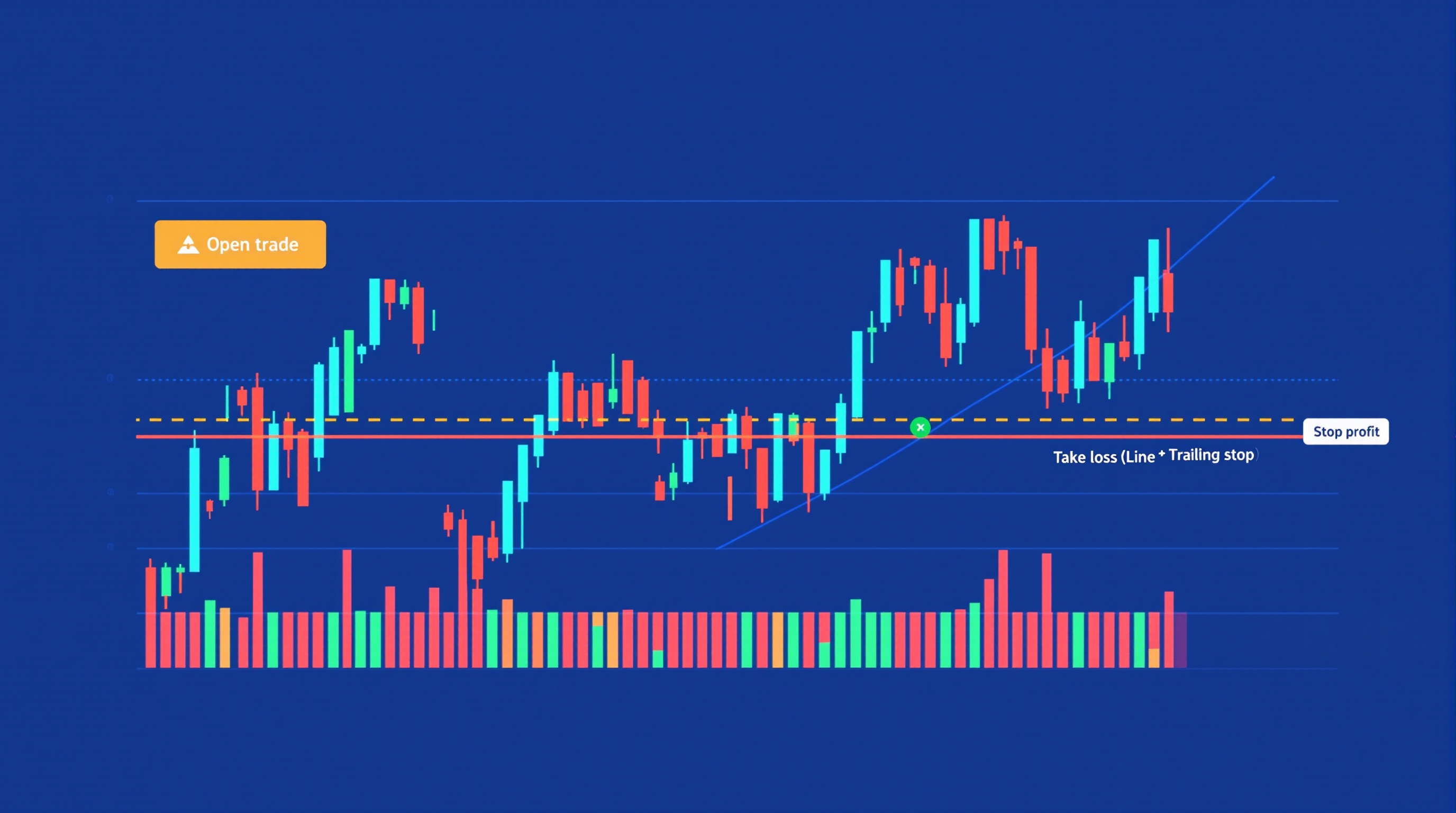
Knowing how to manage an open trade is arguably a harder skill than finding the entry in the first place — most retail traders lose money not because their analysis is bad, but because they mismanage positions once they're live. This lesson builds on Module 7's work on position sizing and stop placement, and assumes you're already comfortable calculating risk per trade before you click buy or sell.
Trading is risky and most retail accounts lose money. Nothing here removes that risk — the goal is simply to make your decisions once, in advance, so you're not improvising while money is on the line.
Why trade management matters more than entries
A good entry with poor management can still lose. A mediocre entry with disciplined management can still be profitable over a series of trades. The reason is simple: once you're in a position, emotion increases — fear of losing what you have, greed for more, or hope that a losing trade "comes back."
Structured trade management does three things:
- Removes in-the-moment decisions. You decide the rules when you're calm, not when price is moving against you.
- Protects your capital. A trade that isn't managed can turn a planned 1% loss into something far bigger.
- Makes your results measurable. If every trade follows the same management logic, you can actually tell whether your edge works.
This is why trade management sits in Module 8, after entries and position sizing — it's the layer that determines whether your edge, if you have one, actually shows up in your account balance.
Setting stops and targets before you enter
The single biggest rule in this lesson: decide your stop loss and take profit — or at least your exit logic — before you open the trade. Not after. Not "somewhere around there."
Practical steps:
1. Place a hard stop loss at the point that proves your trade idea wrong, not at an arbitrary pip distance. 2. Set a target or exit plan, whether that's a fixed reward-to-risk ratio, a key level, or a trailing method. 3. Write both down in your trade journal alongside your reasoning, before entry. 4. Check the instrument's typical spread and volatility so your stop isn't so tight that normal noise takes you out — the /audit.html tool gives you live, broker-specific numbers rather than guesswork.
On platforms like Pepperstone's MetaTrader servers or IG's own platform, you can attach stop loss and take profit orders directly at entry, which removes the temptation to "decide later."
Moving your stop loss: breakeven and beyond
Moving a stop to breakeven once a trade is in profit feels safe, but it's one of the most common ways traders turn genuine winners into scratched, no-progress trades. Price often pulls back to test a recent level before continuing — a stop set right at breakeven gets hit on completely normal movement.
Sensible approaches:
- Wait for structure, not just profit. Move your stop only once price has broken a clear level in your favour, not simply because you're "up a bit."
- Use a fixed buffer. Rather than exact breakeven, move to breakeven plus a small buffer that covers spread and commission.
- Consider a trailing stop for trend-following trades, letting the position run while still protecting gains.
- Never move a stop further away from price to avoid taking a loss — this is one of the fastest ways to blow past your intended risk management forex rules.
Scaling out and partial profit-taking
Scaling out of a trade means closing part of the position at a predefined level and letting the rest run. It's a middle ground between an all-or-nothing exit and holding for a single target.
A simple example structure:
| Stage | Action | Purpose | |---|---|---| | 1R reached | Close 50% of position | Lock in partial profit, reduce anxiety | | Stop moved to breakeven | On remaining 50% | Protect against reversal | | 2R or structure break | Close another 25% | Bank more gain | | Trail remaining 25% | Trailing stop or manual | Let a strong trend pay |
This isn't the only valid structure — some traders prefer a single exit. What matters is picking one, testing it, and applying it consistently so you can judge it fairly over dozens of trades.
Managing costs and time in the trade
Every open position accrues cost over time — spread paid at entry, possible commission, and overnight swap charges if held past rollover. These costs quietly erode a trade's profitability, especially on longer-held positions.
Before managing a trade, know:
- Your total entry cost — spread plus any commission, checked via the cost tool rather than assumed.
- Overnight swap rates if you might hold past rollover — these vary by broker and direction, and can flip a marginal trade into a loser.
- How costs compare across brokers — the /brokers/index.html pages and /cost-impact.html tool let you see the real effect of costs on a held position, side by side.
If a trade needs to run for days to reach target, factor swap into whether it's still worth the risk — don't just watch the price chart in isolation.
Handling news events and volatile periods
Scheduled news releases, thin Friday-close liquidity, and rollover periods all change how a trade should be managed mid-flight.
- Widen mental expectations, not necessarily your stop, around high-impact news — spreads often widen automatically on many brokers' feeds.
- Avoid adding to positions right before major releases; unpredictable spikes can trigger stops that would otherwise have held.
- Consider closing or reducing size ahead of events you can't confidently model, rather than hoping your stop is far enough away.
- Be aware of reduced liquidity late Friday and around rollover — spreads can widen and slippage risk increases.
None of this means avoiding news trading entirely — it means building it into your management plan rather than reacting on the day.
Building your own trade management rules
Learning how to manage an open trade isn't about copying someone else's exact rules — it's about building a consistent process you'll actually follow under pressure. Start simple:
- Write your stop and target logic into your trading plan before every session.
- Decide in advance whether you'll scale out, trail, or hold for a single target.
- Log every management decision in your journal, including deviations from plan.
- Review weekly: are your rules helping, or are you overriding them out of emotion?
Combine this with accurate cost data from /audit.html and broker comparisons at /brokers/index.html, and revisit /methodology.html to understand how PipTax calculates real trading costs. Trade management is a skill built through repetition and honest review — not a shortcut, and not a guarantee of profit.
Key takeaways
- Decide your management plan before you enter — not while the trade is open and your emotions are involved
- Moving a stop to breakeven too early is one of the most common ways traders turn winners into scratched trades
- Scaling out locks in partial profit but only works if you've defined the levels in advance
- Spreads, swaps and slippage all eat into how a trade should be managed — check real costs on the cost tool, not guesswork
- News events and low-liquidity periods (rollover, Friday close) call for wider stops or no new trades at all
- Journal every management decision so you can tell, over time, whether your rules actually add value
Frequently asked questions
- Should I ever move my stop loss further away from price?
- As a rule, no. Widening a stop after entry usually means the original plan has failed and you're hoping rather than managing. If you find yourself doing this often, the position size or entry was probably wrong to begin with — revisit your risk management forex rules, not the stop.
- What's the difference between a trailing stop and manually moving my stop?
- A trailing stop, available on platforms like MetaTrader and IG's own platform, moves automatically by a fixed distance as price moves in your favour. Manual adjustment gives you more control — for example moving to breakeven after a specific structure level breaks — but requires you to be watching the trade.
- Is scaling out of a trade better than an all-or-nothing exit?
- Neither is objectively better — they're different tools. Scaling out reduces regret and locks in some profit early, but can cap gains on a trade that runs far. Test both approaches on a demo account and compare the results in your journal before committing real capital.
- How do costs affect trade management decisions?
- Spread, commission and swap all reduce your effective profit and can turn a marginal trade into a loser if held too long. Before deciding how tightly to manage a position, check your real all-in costs on the PipTax cost tool rather than assuming.
- Do I need to manage every trade the same way?
- No. Your management approach should match the setup — a breakout trade and a range-bound mean-reversion trade often need different stop placement and exit logic. What matters is that you decide the approach before entry, per your trading plan, and follow it consistently.