Home › FX Trading School › Pro
Hedging and Netting Positions: Pro FX Risk Management
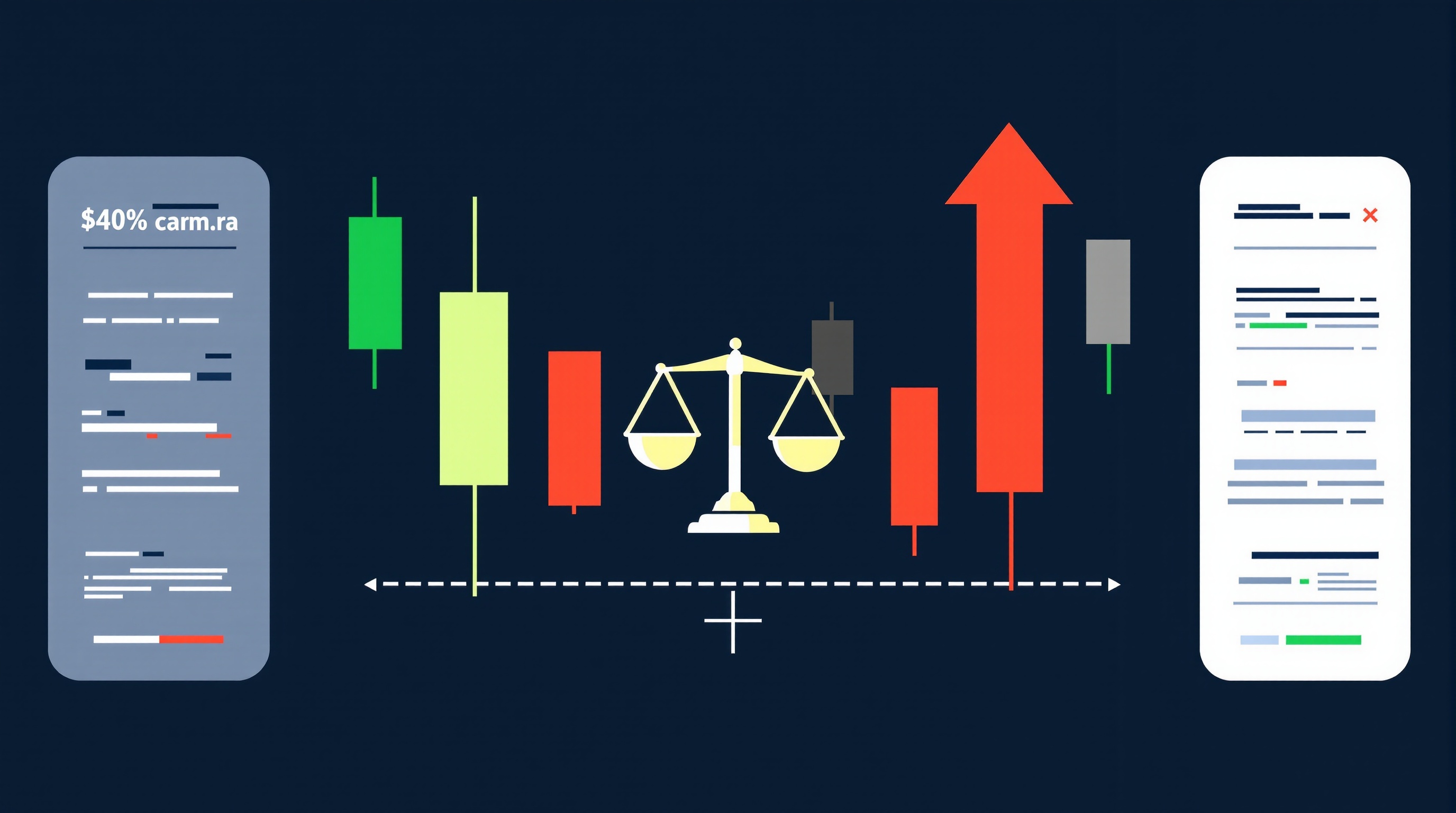
Hedging and netting are two different ways your broker's platform can account for opposing trades in the same currency pair, and understanding the difference matters once you're managing real risk rather than just placing one trade at a time. This lesson builds on Module 9's position sizing and Module 12's correlation risk — if you haven't done those yet, go back first, because hedging without understanding correlation and sizing is how traders quietly double their risk while thinking they've reduced it.
Netting: the default most traders don't think about
A netting account treats all trades in one instrument as a single running position. Buy 1 lot EUR/USD, then later sell 0.5 lots EUR/USD, and the platform doesn't open a second ticket — it reduces your existing long to 0.5 lots. Sell another 0.5 and you're flat.
Key features of netting:
- One position per instrument at any time — size and direction only.
- Opposing trades automatically offset, first-in-first-out (FIFO) in most cases.
- Simpler to read on a statement: one P&L line per pair, not a stack of tickets.
- This is the standard model for US-regulated MT4/MT5 servers, and is common on many other server types too.
Netting isn't a strategy — it's just how the ledger works. Most retail traders operate on netting accounts without ever noticing, because they only ever hold one direction at a time in a given pair anyway.
Hedging: holding both sides at once
A hedging account allows you to hold a long and a short position in the same pair simultaneously, as two entirely separate tickets, each with its own entry price, stop, take-profit and swap calculation.
This matters when you want to:
- Keep a long-term position open while taking a short-term opposing view (e.g. a swing long you don't want to close, plus a tactical short on a news event).
- Partially offset exposure without disturbing the original trade's entry price or history.
- Test or scale a hedge before deciding whether to close the original position outright.
Availability depends on the broker and server, not the trading platform brand. Many non-US brokers — Pepperstone included — offer a hedging account type on their international MT4/MT5 servers, alongside a netting option. IG's own platform has its own position model, separate from MetaTrader's rules entirely, so check documentation rather than assuming behaviour carries across.
Why traders confuse hedging with risk reduction
This is the most common misunderstanding at this level: opening an offsetting position does not erase your existing loss or lock in a profit-free outcome. It freezes the net exposure roughly flat from that point forward, but:
- You now hold two open tickets, each subject to its own spread or commission on entry.
- Margin is typically required on both legs unless your broker explicitly offers reduced hedged margining — don't assume it's netted for margin purposes just because the exposure is netted for risk purposes.
- Swaps apply to both legs separately — a long and short in the same pair usually have different swap rates, so a "flat" hedge can still bleed or earn overnight financing asymmetrically.
- Closing both legs later still means paying the round-trip cost twice.
If your actual goal is simply to stop losing money on a trade, closing it is usually cheaper and cleaner than hedging it. Hedging earns its keep when you have a genuine reason to preserve the original position's structure — tax lot, long-term thesis, or a scaling plan — not as a substitute for a stop-loss.
A practical decision framework
Before opening a hedge instead of just closing or reducing, run through this checklist:
1. Why am I not just closing the position? If the honest answer is "I don't want to admit the loss," that's not a reason to hedge. 2. What does the hedge cost? Add the spread/commission on the new ticket to your existing cost basis — check current figures in the /audit.html tool rather than guessing. 3. What's the swap differential? Pull both long and short swap rates for the pair from /rates.html; a "flat" position can still cost money daily. 4. Is margin actually reduced? Confirm with your broker whether hedged positions get margin relief — many don't. 5. What's my exit plan for both legs? A hedge with no unwind plan just becomes two positions to manage instead of one.
Comparing the cost of hedging vs closing
| Action | Tickets open | Spread/commission paid | Swap exposure | Margin used | |---|---|---|---|---| | Close the losing position | 0 | Once (the closing trade) | None | Freed up | | Reduce position size | 1 (smaller) | Once, on the partial close | Reduced pro-rata | Reduced | | Open a full hedge | 2 | Twice (original + hedge entry) | Both legs, separately | Both legs (usually) |
This table is illustrative of the structure, not specific numbers — actual spread, commission and swap figures vary by broker, account type and instrument, so always confirm live costs via /audit.html before deciding.
Checking your own account setup
Don't assume your account behaves one way or the other. To confirm:
- Open a small opposing trade in a demo or micro-lot on your live account and see whether it nets automatically or shows as a second ticket.
- Check your broker's account documentation — Pepperstone lists hedging vs netting explicitly per server type in its platform guides.
- If you trade across multiple brokers via the /brokers/index.html comparison, note that the same platform brand can behave differently by server or jurisdiction — MT4 on one server isn't guaranteed to match MT4 on another.
Conclusion: hedging and netting are tools, not shortcuts
Hedging and netting are position-accounting mechanics, and neither one makes risk disappear — a hedge simply trades ongoing directional exposure for extra cost and complexity, while netting keeps things simple by design. Use hedging deliberately, for a specific reason you can state out loud, and always run the real cost — spread, commission, swap and margin — through /audit.html before you open the offsetting ticket. If you're not sure why you're hedging rather than closing, that's usually the answer you need.
Key takeaways
- Hedging and netting are two different position-accounting models, not two different trading strategies
- A netting account nets opposing trades into one position; a hedging account can hold long and short in the same pair simultaneously
- US-based MT4/MT5 servers are usually FIFO/netting only; most non-US brokers, including Pepperstone, offer a hedging account type
- A genuine hedge reduces directional risk but doubles your spread/commission cost and ties up margin on both legs
- Before hedging, know your broker's swap and margin treatment for opposing positions — check via /audit.html rather than assuming
- For most retail traders, closing or reducing a losing position is cheaper and simpler than opening an offsetting hedge
Frequently asked questions
- What's the real difference between hedging and netting?
- Netting is an accounting rule: if you buy 1 lot and later sell 1 lot of the same pair, the platform closes the position and nets the result to zero (or to whatever the residual size is). Hedging accounts don't net automatically — you can hold a long and a short in the same instrument at the same time, shown as two separate open tickets with two separate P&Ls.
- Can I hedge on MetaTrader?
- It depends on the server, not just the platform. Some MT4/MT5 servers (commonly US-regulated ones) are FIFO/netting-only by regulation. Non-US brokers, including Pepperstone's international entities, typically offer a 'hedging' account type alongside netting. Always check the specific server/account type before assuming — it's shown in your account settings or confirmed by the broker.
- Does IG's own platform support hedging?
- IG's proprietary platform uses its own position model, distinct from MT4/MT5 netting rules. If you plan to hold offsetting positions, check IG's platform documentation or ask their support directly, and compare the actual cost of doing so using the cost tool rather than assuming it behaves like MetaTrader.
- Is hedging a way to avoid taking a loss?
- No. Hedging locks in the current unrealised loss (or gain) on the original position by opening an offsetting trade — it doesn't erase it. You now pay spread/commission on two tickets and hold margin on both, and the net exposure is roughly flat. It defers a decision; it doesn't remove risk-free.
- Are there tax or margin implications to hedging?
- Margin: yes — most brokers still require margin for both legs unless they explicitly offer reduced hedged margining, so check your broker's margin policy. Tax treatment of hedged positions varies by jurisdiction and personal circumstances — this is not tax advice; speak to a qualified accountant.