Home › FX Trading School › Pro
Forward Testing & Out-of-Sample Validation
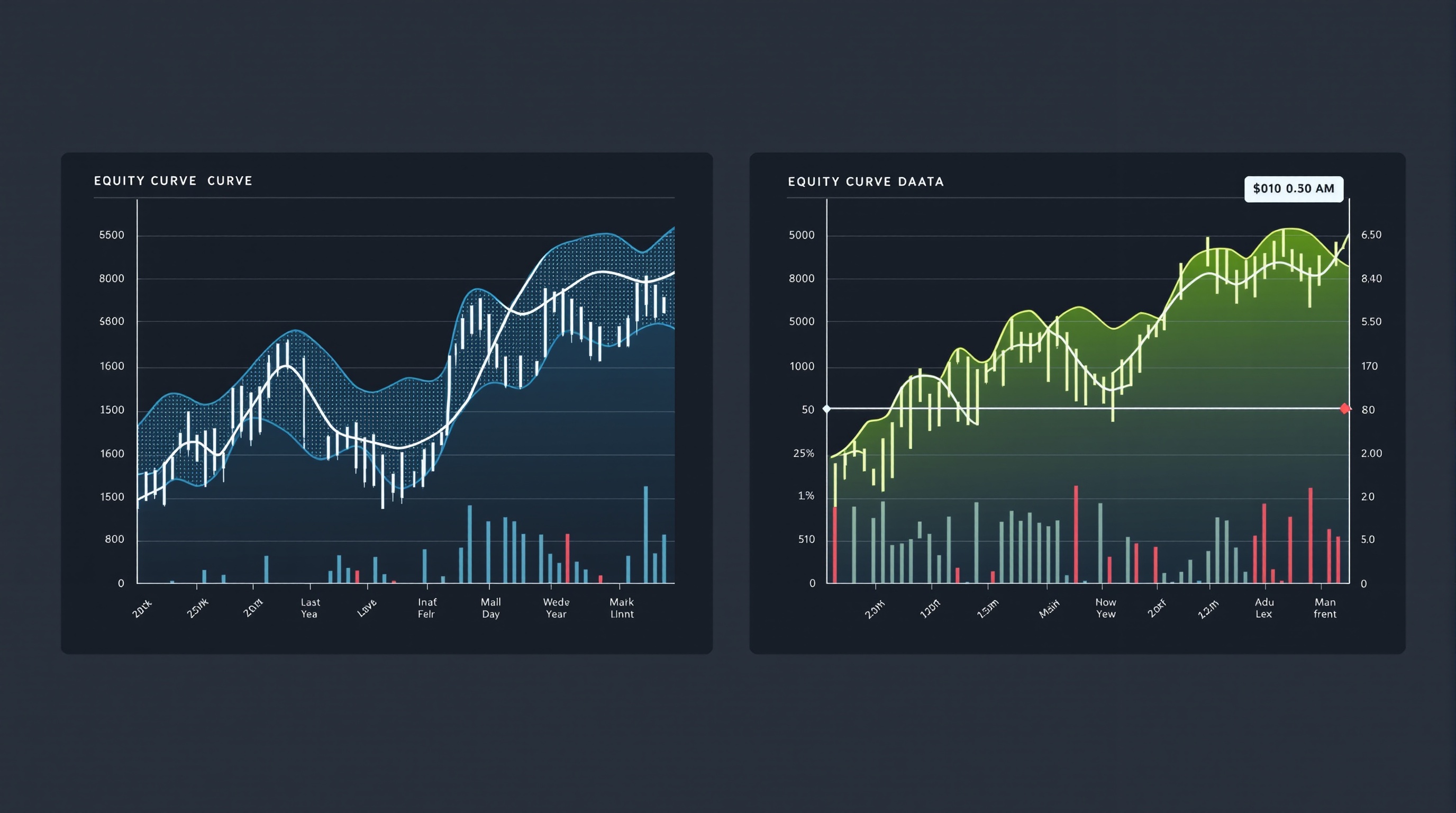
Forward testing is the step most retail traders skip — and it's the single biggest reason backtested strategies fail the moment real money goes on. This lesson builds on backtesting (Module 12) and assumes you already understand how to code or manually replay a rule set against historical data. Here we cover what happens after the backtest: how to validate a strategy on data it has never seen, and why that discipline separates a system with a genuine edge from one that's simply been fitted to the past.
What Forward Testing Actually Means
Forward testing is running your strategy's exact rules against new data it wasn't built or tuned on — either a demo/small-live account going forward in real time, or a historical slice you deliberately held back during development.
The logic is simple: any strategy can be made to look great on data you've already seen, because you can keep adjusting parameters until the equity curve looks right. That's curve-fitting, not edge. Forward testing removes the temptation because the data genuinely didn't exist (or wasn't looked at) when you finalised the rules.
Two common forms:
- Live/demo forward testing — deploy the finished strategy on a demo account (or tiny live account) and let it trade in real time, untouched, for a set period.
- Out-of-sample historical testing — split your historical data before you start building; optimise only on the first chunk, then run the finished rules once against the second chunk.
Both matter. Live forward testing also captures execution reality — slippage, requotes, latency — that a historical replay can miss. Neither replaces the other.
Out-of-Sample Validation: The Core Discipline
Out-of-sample validation is the historical version of forward testing, and it lives or dies on one rule: you split the data before you touch it, not after.
A practical workflow:
1. Gather your full historical dataset (say, five years of price data). 2. Split it — commonly 70/30 or 80/20 — into an in-sample chunk and an out-of-sample chunk. 3. Build, tweak and optimise your strategy only on the in-sample chunk. 4. Lock the rules. No more changes. 5. Run the locked strategy once against the out-of-sample chunk. 6. Compare results honestly.
If performance collapses out-of-sample — win rate drops sharply, drawdown balloons, expectancy turns negative — the strategy was likely curve-fitted to noise in the in-sample period. That's a genuine result, not a failure of the process; the process just saved you from trading a fantasy.
The temptation to peek at out-of-sample data early and re-adjust is strong. Resist it — every time you look and tweak, you contaminate the test and it stops being out-of-sample.
Walk-Forward Testing: A More Rigorous Step Up
Walk-forward testing extends out-of-sample validation into a rolling process, closer to how institutional quant desks actually validate systems.
Instead of one split, you use many rolling windows:
| Step | Window used to optimise | Window used to test | |---|---|---| | 1 | Jan–Jun 2021 | Jul–Sep 2021 | | 2 | Apr–Sep 2021 | Oct–Dec 2021 | | 3 | Jul–Dec 2021 | Jan–Mar 2022 |
Each "test" window is out-of-sample relative to its own optimisation window, and the windows roll forward through time. This tells you whether the strategy holds up across many different market regimes, not just one lucky split.
It's more work — and if you're coding this, it's worth doing in a proper backtesting framework rather than by hand — but it's the closest a solo trader gets to genuinely robust validation. A strategy that survives several walk-forward cycles with reasonably consistent stats is far more credible than one that passed a single 80/20 split.
Building a Forward Testing Plan You'll Actually Follow
A forward test only works if you run it properly, which means deciding the rules in advance:
- Fix the strategy first. No mid-test tweaks. If you change the rules, the clock resets.
- Set a minimum sample size. Aim for at least 100 trades or a set number of months — whichever gives a meaningful sample for your trade frequency.
- Choose demo or small live. Demo removes financial risk but also removes real psychology; small live money adds emotional realism at low cost.
- Log everything. Entry, exit, reason, size, and the market condition at the time (trending, ranging, news-driven).
- Model costs honestly. Include realistic spread, commission, swap and slippage assumptions — not your best-case numbers.
- Decide pass/fail criteria before you start. For example: "expectancy must stay positive and max drawdown must stay under X% across the full test."
Writing these down before you start stops you from moving the goalposts when results are disappointing — which they often are, and that's useful information.
Costs Are Part of the Test, Not an Afterthought
A strategy's backtested edge can vanish once real trading costs are applied. This is where a lot of "profitable" systems quietly die.
- Spread and commission eat into every single trade, win or lose.
- Swap/rollover matters if you hold positions overnight, and rates vary by broker and direction.
- Slippage on entries and exits, especially around news, can be worse than any backtest assumes.
Costs also differ by broker and account type — Pepperstone's MetaTrader servers and IG's own platform, for instance, have different spread/commission structures depending on account type, and these change over time. Rather than guessing or fabricating numbers, run your assumptions through PipTax's cost tool at /audit.html and check current broker structures on /brokers/index.html before finalising your forward test's cost model. If you haven't already, PipTax's methodology page at /methodology.html explains how we approach cost comparisons generally.
Common Mistakes That Undermine the Test
Even traders who know the theory trip up in practice:
- Peeking at out-of-sample data while still "optimising" — this quietly turns out-of-sample into in-sample.
- Cherry-picking the test window to a period that happens to suit the strategy.
- Ignoring costs or using unrealistically tight spread assumptions.
- Stopping early the moment results look good, without completing the planned sample size.
- Abandoning a strategy after one bad month without checking whether that's within its expected variance.
- Skipping demo/live forward testing entirely and going straight from backtest to full-size live trading.
Any one of these can turn a genuinely rigorous process into false confidence — which is worse than no testing at all, because it feels like proof.
Conclusion: Make Forward Testing Non-Negotiable
Forward testing and out-of-sample validation exist because the market doesn't care how good your backtest looked — it only cares whether your edge holds up on data it hasn't influenced. Split your data honestly, lock your rules before testing, model realistic costs, and give the process enough time and trades to mean something statistically. It's slower and less exciting than tweaking parameters until the equity curve looks perfect, but it's the difference between a system you can trust with real capital and one that only ever worked in hindsight. Trading carries genuine risk of loss regardless of how well a strategy tests — forward testing reduces false confidence, it doesn't eliminate risk. For the next step in this course, head back to /school/index.html to continue through Module 13.
Key takeaways
- Forward testing means running a strategy on new, unseen data or a live demo/small-live account after backtesting — it's the real test of whether the edge survives contact with fresh conditions
- Out-of-sample validation requires splitting your data before you optimise, not after, or the results are meaningless
- A strategy that only works on the exact historical period it was built on is curve-fitted, not robust
- Walk-forward testing (rolling optimise-then-test windows) is the closest a solo trader gets to institutional-grade validation
- Costs — spread, commission, swap, slippage — must be included in every test stage, and they differ by broker and account type, so check /audit.html rather than assume
- Plan for months of forward testing before committing meaningful size; this is a discipline exercise as much as a statistical one
Frequently asked questions
- What's the difference between backtesting and forward testing?
- Backtesting runs your rules against historical price data you already have. Forward testing runs the same rules against data that didn't exist when you built the strategy — either genuinely new live/demo data going forward, or a historical chunk you deliberately held back and never looked at during development. Backtesting tells you the strategy worked on the past; forward testing tells you whether it might work on the future.
- How much data should I hold back for out-of-sample validation?
- A common approach is 70/30 or 80/20 — build and optimise on the larger chunk, then test once on the smaller, untouched chunk. There's no universal magic split; what matters is that the out-of-sample portion is genuinely untouched during development and covers enough trades (ideally 100+) to mean something statistically.
- Can I forward test on a demo account instead of live?
- Yes, and most traders should start there. A demo account on Pepperstone's MetaTrader servers or IG's own platform lets you test execution and rule-following without risking capital. The limitation is psychology — demo money doesn't trigger the same fear and greed as live money, so a demo pass is necessary but not sufficient before going live.
- How long should forward testing take before going live with real size?
- There's no fixed number, but most robust validation processes run for several months and cover a meaningful sample of trades across different market conditions (trending, ranging, high and low volatility). Rushing this stage defeats the purpose — the whole point is patience.
- Do spreads and commissions matter during forward testing?
- Enormously. A strategy that looks profitable on paper can be marginal or unprofitable once realistic spread, commission, swap and slippage are included. Always test with costs modelled as closely as possible to a real account, and check current figures on /audit.html since they change and vary by broker.