Home › FX Trading School › Pro
Trading News and NFP Safely: A Pro Execution Guide
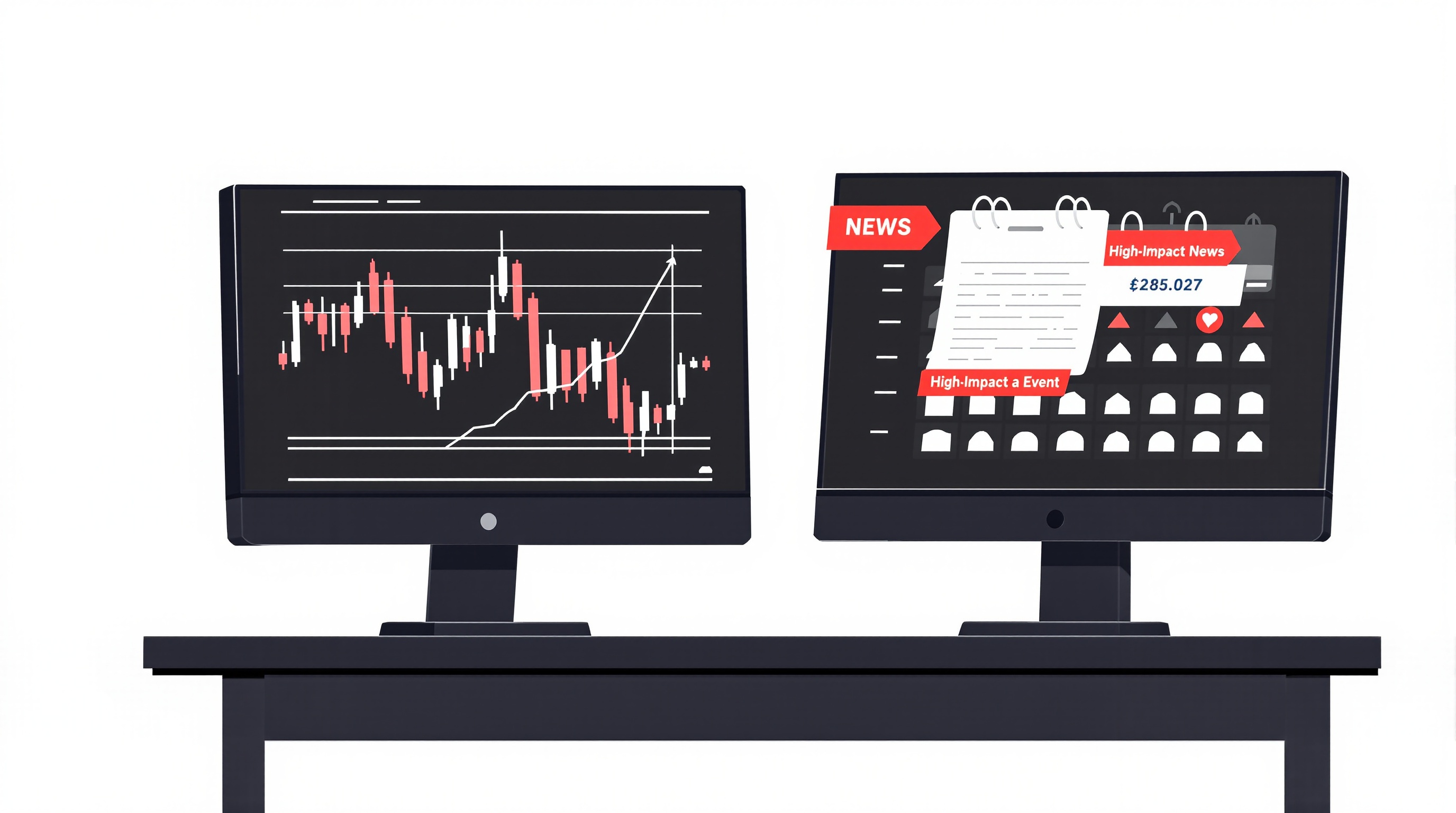
Trading news and NFP safely is less about predicting the number and more about controlling what happens to your order in the two or three minutes either side of the release. This is Module 12 of the PipTax FX Trading School, and it builds directly on the execution-cost ideas from Module 8 (spreads, commissions and slippage) and the order-type mechanics from Module 10. If you haven't worked through those, do that first — this lesson assumes you already know what slippage and requotes are.
Why NFP and news events are different
Non-Farm Payrolls (NFP), central bank rate decisions and CPI prints are the moments when the market's normal liquidity structure breaks down for a short window. Understanding this is the foundation of trading news and NFP safely.
In the 30–120 seconds around release:
- Spreads widen — sometimes dramatically, as liquidity providers pull quotes to avoid being picked off.
- Slippage increases — your fill price can be several pips (occasionally tens of pips) away from where you clicked.
- Stop-loss orders can gap through — a stop is not a guarantee of the exit price you set, only that an order to close will be sent once triggered.
- Volume spikes then thins — the initial spike often reverses or extends violently as algos and late reactors pile in.
None of this means news events can't be traded. It means the execution mechanics change, and your plan needs to change with them.
Know your broker's execution model
Not all brokers handle news the same way, and this is where checking specifics matters more than usual.
- Market makers / dealing desk brokers may widen spreads and can, in some models, requote you during volatility.
- STP/ECN brokers (the model Pepperstone's Razor account and IG's direct market access options are built around) pass your order to liquidity providers, so you get real market spreads — which can still gap wide, but there's no dealer intervention.
- Platform matters too — Pepperstone's MetaTrader servers and IG's own proprietary platform can behave differently around news in terms of quote feed speed and order queuing.
Before you trade your next NFP, check your specific account's execution type and historical spread behaviour using PipTax's [cost audit tool](/audit.html), and compare it against other regulated brokers on the [broker comparison pages](/brokers/index.html). Don't assume — verify.
A pre-release checklist
Run this every time, not just for NFP:
1. Check the calendar — know the exact release time and consensus forecast. 2. Check your open positions — do you have anything with a stop close enough to be gapped through? 3. Check margin — volatility can trigger margin calls faster than normal; confirm you have headroom. 4. Decide: flat, hedged, or in with wider stops — pick one deliberately, don't default by inertia. 5. Check spread history for that instrument around past releases using your broker's own data or the [cost impact tool](/cost-impact.html). 6. Set a max-loss mental limit for the session, separate from your normal risk rules.
Three execution approaches, compared
| Approach | What it means | Main risk | |---|---|---| | Stay flat | Close/avoid positions before release | Miss the move entirely | | Trade the reaction | Wait for the initial spike to settle, enter on confirmation | Late entry, smaller reward | | Pre-position with wide stops | Hold through release with a stop sized for the expected volatility | Large loss if stop is gapped or hit |
For most retail traders still building consistency, staying flat or trading the reaction is the safer default. Pre-positioning through NFP is a specialist tactic, not a beginner one — and even experienced traders size it down.
Order types and their limits during news
Understanding order mechanics here is critical:
- Market orders during news can fill far from the displayed price — this is normal slippage, not broker malpractice, though the amount should still be checked against your broker's typical range.
- Stop-loss orders become market orders once triggered, so in a fast market your actual exit can be worse than your set level.
- Guaranteed stops, where offered, remove gap risk but usually cost a premium — worth understanding via your broker's product pages rather than assuming they're free.
- Limit orders won't fill through a gap, which can leave you unintentionally out of the market on the wrong side of a move.
None of these are flaws to exploit or avoid entirely — they're mechanics to plan around.
Position sizing for volatility events
Standard position sizing assumes standard volatility. NFP isn't standard. Adjust by:
- Reducing size relative to your normal risk-per-trade, since stop distances often need to be wider.
- Widening stops to a level that reflects realistic post-release ranges, not your usual technical level.
- Recalculating risk in money terms, not just pips, once your stop distance changes.
- Accepting wider spreads as a real cost — factor the likely spread at release time into your entry, not just your usual quoted spread.
This is exactly the kind of cost that erodes edge quietly over many trades, which is why it's worth benchmarking with the [cost audit tool](/audit.html) rather than guessing.
Building this into your routine
Trading news and NFP safely isn't a one-off skill you learn once — it's a checklist you run every release, refined by watching how your own broker's spreads and fills actually behave versus what you expected. Log every news trade: entry method, stop distance, actual slippage, and outcome. Over a few months of NFPs, you'll have real data on your own execution quality rather than assumptions. Pair that log with PipTax's [methodology notes](/methodology.html) so your record-keeping stays consistent with how the rest of the course measures cost and edge.
Trading remains genuinely risky, and most retail accounts lose money — news events amplify that risk rather than reduce it. Treat every NFP as a test of process, not a shortcut to profit.
Key takeaways
- Trading news and NFP safely means planning for wider spreads, slippage, and stop gaps — not predicting the number itself
- Know your account's execution model (market maker vs STP/ECN) before your next high-impact release
- Staying flat or trading the post-release reaction is the safer default versus pre-positioning through the event
- Reduce position size and widen stops to reflect realistic NFP volatility, not your normal technical levels
- Verify your broker's actual spread and fill behaviour around news using the cost audit tool rather than assuming
- Log every news trade to build real data on your own execution quality over time
Frequently asked questions
- Should beginners trade NFP at all?
- Most beginners are better off staying flat through NFP while they're still building consistency elsewhere. The volatility magnifies both execution costs and sizing mistakes, so it's a poor place to learn the basics.
- Do stop-losses protect me during news events?
- A stop-loss triggers an exit order once your level is hit, but in fast markets it can fill at a worse price than set — this is called slippage or a gap-through. Guaranteed stops, where available, remove this risk for a fee.
- Why do spreads widen so much around NFP?
- Liquidity providers reduce or pull quotes during extreme volatility to manage their own risk, which widens the spread you're quoted. This is normal market behaviour, not something specific to one broker.
- Is one broker's execution definitely better for news trading?
- We can't say one broker is better without live data — execution quality varies by account type, platform and even by specific news event. Use the cost audit tool to compare your own broker's behaviour against others.
- What's the safest order type to use around NFP?
- There isn't a universally 'safe' order type — market orders can slip, limit orders can fail to fill through a gap, and stops can trigger at a worse price. The right choice depends on whether you're entering, exiting, or protecting an existing position.