Trading 212 Tax UK: CFD, Invest and ISA Accounts Explained
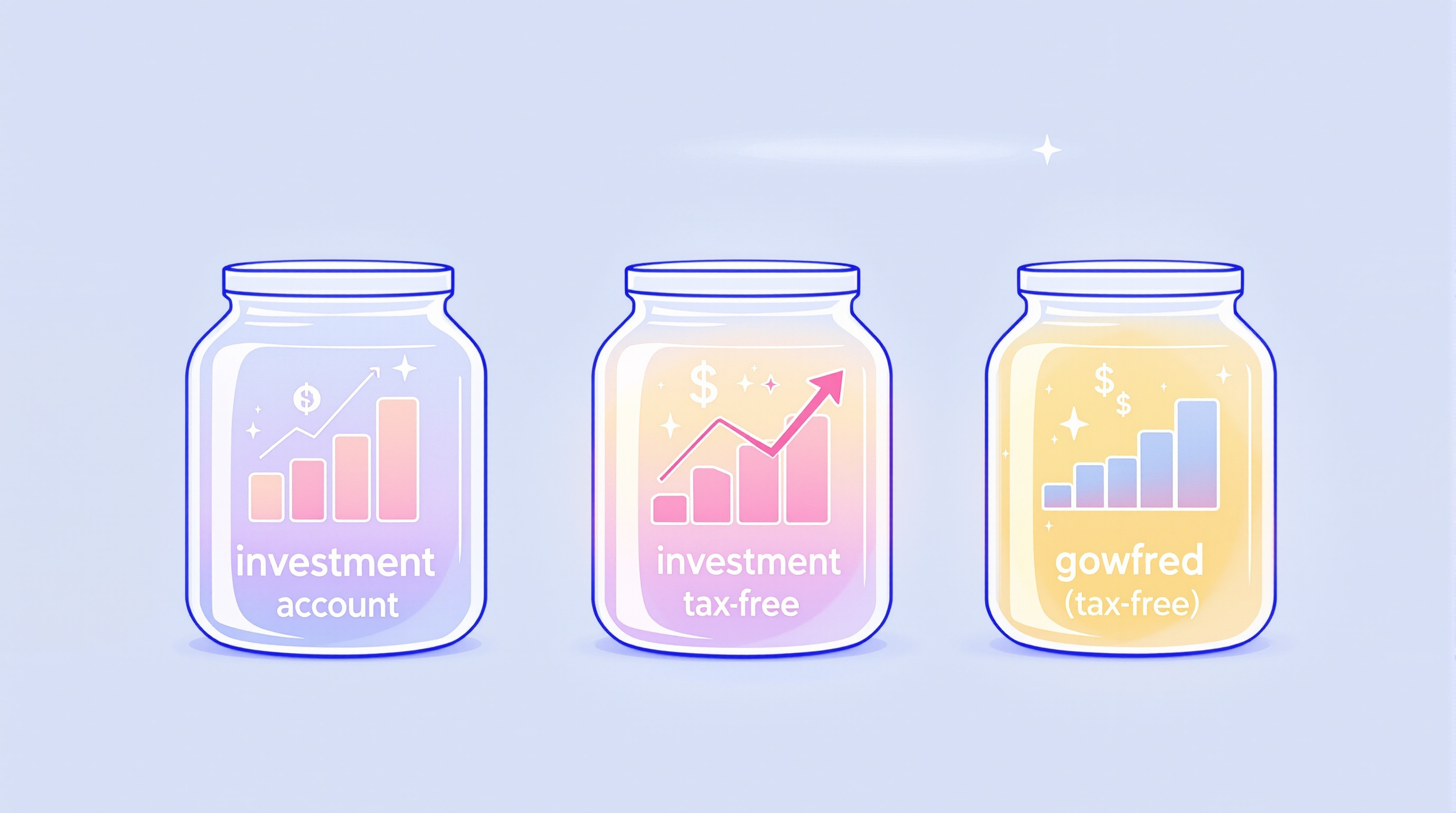
The short answer to the trading 212 cfd tax uk question is this: only the CFD account produces taxable trading activity that most people need to report themselves — Invest and Stocks & Shares ISA profits are handled differently, and ISA gains are tax-free. Trading 212 offers all three account types from one app, but HMRC treats them very differently, so it's worth understanding each before you assume anything about your own tax position.
This article explains what each account is for, what the annual statement actually shows, and when you're expected to tell HMRC about it. It's general information, not tax advice — for anything unusual (large losses, dual accounts, non-UK residence, or spread betting comparisons) speak to an accountant or check directly with HMRC.
The three Trading 212 account types, side by side
Trading 212 runs three separate wrappers, and each has its own tax treatment:
| Account | What it is | Typical tax treatment | |---|---|---| | CFD | Leveraged derivative contracts on shares, indices, forex, commodities | Usually taxable as capital gains (sometimes income, depending on your facts) | | Invest | Real share/ETF ownership, no leverage | Taxable as capital gains on disposal; dividends taxable as income | | ISA (Stocks & Shares) | Same underlying investments as Invest, wrapped in a tax-free shelter | Tax-free — no CGT, no income tax on dividends |
The CFD account is the one most likely to generate a filing obligation, because you're opening and closing contracts frequently and each closed position is a disposal for CGT purposes. Invest account trading is taxable too, but many UK users hold ETFs or shares long-term and stay under the annual Capital Gains Tax allowance. The ISA is the only one of the three that's genuinely shielded — HMRC doesn't want to hear about ISA gains at all.
Is Trading 212 CFD trading taxable in the UK?
For most individuals, gains and losses on Trading 212 CFDs fall under Capital Gains Tax (CGT), not Income Tax. That means:
- Profits are added together with any other capital gains in the tax year.
- Losses can be offset against gains, and unused losses can be carried forward if reported to HMRC in time.
- You only owe tax if your total net gains for the year exceed the annual CGT exempt amount (this allowance has been cut in recent tax years, so check the current figure on GOV.UK before assuming you're under it).
There's an important edge case: HMRC's own guidance on the badges of trade (see HMRC manual BIM20200 onwards) sets out how frequency, organisation, and intention can turn what looks like investing into a trading activity taxed as income instead of capital gains. Very high-frequency CFD trading, especially if it looks like your main occupation, can tip into this category. Most retail CFD users sit on the CGT side of the line, but if you trade full-time or at high volume, get this checked properly.
Note also that CFDs are not spread betting — HMRC's spread betting guidance at BIM22015 (tax-free treatment) does not apply to CFDs. Trading 212 CFD profits are not automatically tax-free the way spread betting profits typically are.
What the annual statement actually shows
Trading 212 provides downloadable statements and, at year-end, a tax/annual summary you can pull from the account. Typically this includes:
- A list of closed CFD positions with realised profit/loss per trade
- Total realised gains and losses for the CFD account over the tax year
- Dividend and interest income received (Invest/ISA accounts)
- Currency conversion detail where trades were opened in non-GBP instruments
What it usually doesn't do is calculate your final CGT liability for you. It gives you the raw disposals; you (or your accountant) still need to:
1. Match disposals against the correct tax year (6 April to 5 April) 2. Apply same-day and 30-day matching rules for identical assets 3. Add in any gains/losses from other platforms or assets 4. Deduct allowable costs — this is where currency conversion gains/losses can matter; HMRC's guidance on foreign currency gains sits in the CG78300 series of the Capital Gains manual
If you trade instruments priced in USD or EUR through a GBP account, currency movement can create a separate taxable gain or loss alongside the trade itself. This is easy to miss on a simple statement read-through.
When must a Trading 212 user actually file?
You need to tell HMRC about CFD/Invest activity if any of the following apply:
- Your total net capital gains for the tax year (across all assets, not just Trading 212) exceed the annual CGT allowance
- Your total proceeds from disposals exceed four times the annual allowance, even if your gains are small (this triggers a reporting requirement even with no tax owed)
- You receive dividend income above the dividend allowance
- HMRC has already asked you to file a Self Assessment return for other reasons
If none of these apply — say, you made a few small CFD trades and stayed well under both thresholds — you typically don't need to report anything for that activity. But "typically" is doing some work in that sentence, so if you're close to a threshold, check the current GOV.UK figures rather than relying on last year's numbers.
Filing itself is done through Self Assessment, usually online, with the deadline of 31 January following the end of the tax year for both filing and payment.
Trading 212 CFD tax UK: record-keeping that actually helps
Whichever account you use, keep records that go beyond the platform's own summary:
- Export statements every quarter, not just at year-end — platforms change formats and history windows aren't guaranteed forever
- Keep a separate log of currency conversions if you trade non-GBP instruments
- Track costs (spreads, overnight financing, any commissions) since these can be relevant to your calculations — use PipTax's [cost impact calculator](/cost-impact.html) to see how spread and financing costs compound over a year of CFD trading
- Cross-check totals against Trading 212's annual statement rather than trusting a single figure
None of this replaces professional advice, but good records make that advice cheaper and faster to get.
Comparing Trading 212 with other UK brokers
Trading 212 isn't the only route into CFD or spread betting in the UK, and tax treatment depends on the product, not the broker's name. A CFD is taxed the same way whether it's opened with Trading 212, Pepperstone, or IG — what differs between brokers is cost structure, platform, and whether spread betting is offered alongside CFDs (spread betting has different tax treatment under BIM22015).
If you're comparing providers:
- Check whether the broker offers spread betting as well as CFDs — this changes the tax picture, not just the pricing
- Use the [broker comparison pages](/brokers/index.html) to see structural differences between providers like Pepperstone and IG
- Run your own numbers through the [PipTax audit tool](/audit.html) rather than relying on headline spread figures
Conclusion
Sorting out trading 212 cfd tax uk questions comes down to knowing which of the three accounts produced the activity: CFD and Invest gains are generally taxable and need tracking against CGT thresholds, while ISA gains are tax-free and ignored by HMRC entirely. The annual statement gives you raw disposal data, not a finished tax calculation, so build your own record-keeping habit rather than waiting until January. This article is general information, not tax advice — for anything beyond a straightforward case, HMRC's manuals (BIM20200, BIM22015, CG78300) are the primary source, and a qualified accountant is the right call for edge cases.
Key takeaways
- Only the CFD and Invest accounts create activity that may need declaring; the ISA is tax-free and ignored by HMRC entirely
- CFD profits are usually taxed as Capital Gains, not automatically tax-free like spread betting under BIM22015
- The annual statement lists raw disposals and income but doesn't calculate your final tax liability
- You must file if net gains exceed the CGT allowance, proceeds exceed the reporting threshold, or dividends exceed the dividend allowance
- High-frequency or full-time CFD trading can be reclassified as income under HMRC's badges of trade (BIM20200)
- This is general information, not tax advice — use an accountant or HMRC for edge cases
Frequently asked questions
- Do you have to declare Trading 212 profits?
- Yes, if profits come from the CFD or Invest accounts and exceed the annual Capital Gains Tax allowance, or if total disposal proceeds exceed the reporting threshold, or dividends exceed the dividend allowance. ISA profits never need declaring. Check current GOV.UK thresholds each tax year, as allowances change.
- Does Trading 212 report to HMRC?
- Trading 212, like other UK-regulated brokers, can share account and transaction data with HMRC under information-sharing rules, but you remain personally responsible for declaring taxable gains via Self Assessment. Don't assume silence from the platform means nothing needs reporting.
- Is Trading 212 CFD trading taxed the same as spread betting?
- No. CFDs are usually taxed under Capital Gains Tax rules, while spread betting is typically tax-free under HMRC's BIM22015 guidance. They're different products with different tax treatment, even when offered by the same broker.
- Do ISA gains from Trading 212 need to be reported?
- No. Gains, dividends and interest inside a Stocks & Shares ISA are tax-free and don't need to be reported to HMRC at all, regardless of how large they are, as long as they stay within the ISA wrapper.
- What does the Trading 212 annual tax statement include?
- It typically lists closed CFD positions with realised profit/loss, total gains and losses for the tax year, dividend and interest income, and currency conversion details. It doesn't calculate your final CGT liability — you still need to apply matching rules and thresholds yourself.
- Can CFD trading be taxed as income instead of capital gains?
- In some cases, yes. HMRC's badges of trade guidance (BIM20200) can classify very frequent, organised trading as a trading activity taxed as income rather than capital gains. Most retail traders fall under CGT, but high-volume or full-time traders should get this checked.