Mean-Reversion Forex Systems Explained
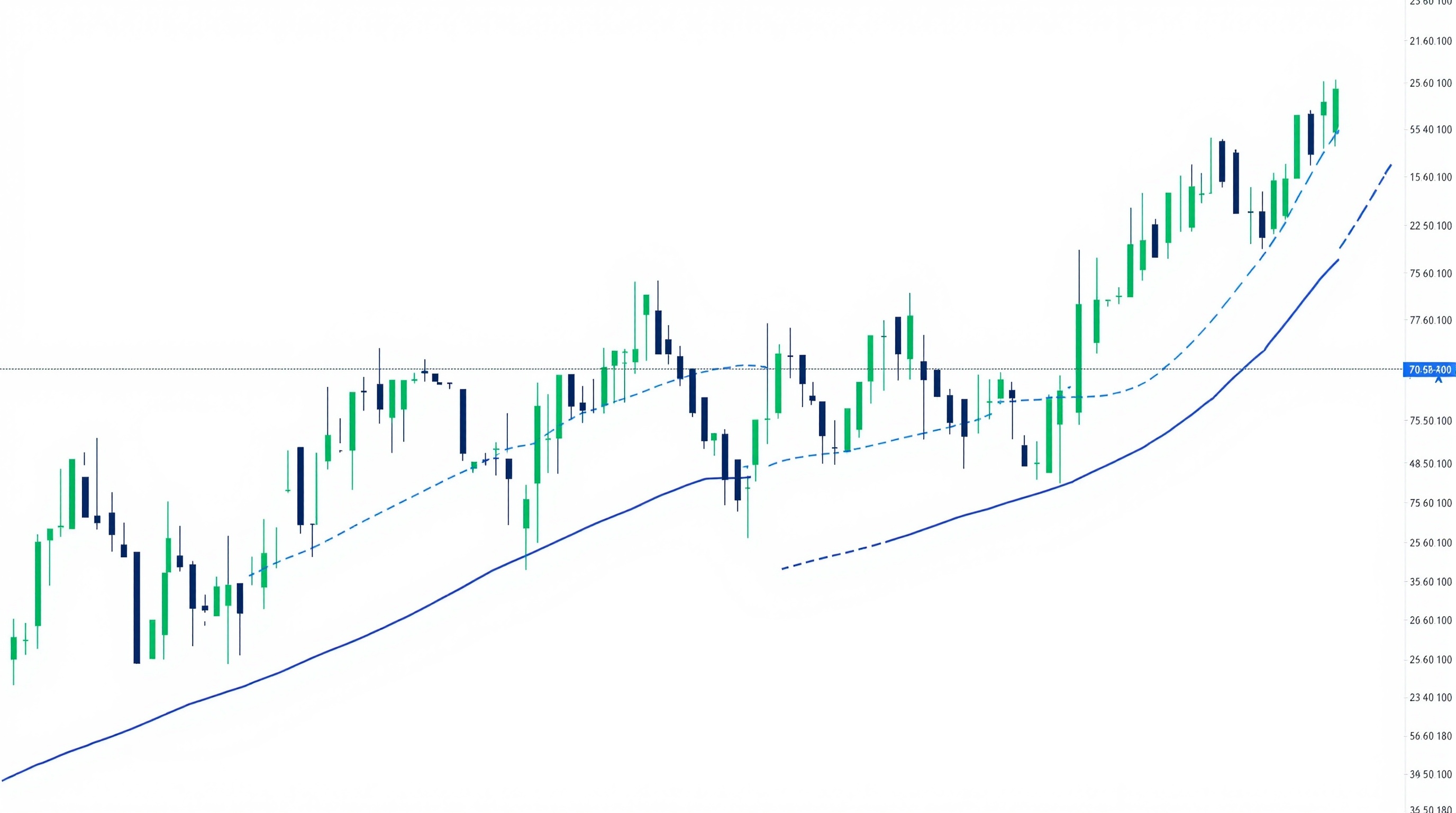
Mean-reversion forex systems are built on a simple idea: price that has stretched too far from its average tends to snap back. That's the theory, anyway — and like every trading idea, it works until it doesn't. This guide explains how these systems actually function, how to test one properly, and how to tell a genuine strategy from a signal-selling scheme dressed up as one.
What Mean-Reversion Forex Systems Actually Do
A mean-reversion system assumes currency pairs oscillate around a statistical "fair value" — often a moving average, a pivot level, or the middle of a Bollinger Band — and that extreme deviations get pulled back in. Common building blocks include:
- Bollinger Bands – buy near the lower band, sell near the upper band, on the assumption price reverts to the middle line.
- RSI or Stochastic extremes – fading overbought/oversold readings rather than following them.
- Z-scores – measuring how many standard deviations price sits from its rolling average.
- Pair or basket spreads – in more advanced setups, trading the *relationship* between two correlated instruments rather than one outright price.
These systems tend to do best in ranging, low-trend conditions — think quiet sessions, tight ranges, or pairs stuck between well-tested support and resistance. They tend to do *worst* during breakouts, news shocks, or sustained trends, where "extreme" prices keep getting more extreme. That asymmetry — many small wins, occasional large losses — is the single most important thing to understand before running one live.
Building Blocks of a Real Mean-Reversion Strategy
A workable system needs more than an indicator crossing a line. At minimum it should define:
1. Entry trigger – the specific condition (e.g. price closes outside the 2-standard-deviation band). 2. Confirmation filter – something to avoid fading a genuine trend, such as a higher-timeframe trend filter or an ADX threshold. 3. Exit rule – target at the mean, plus a hard stop-loss beyond the extreme (never open-ended). 4. Position sizing – fixed fractional risk per trade, not a fixed lot size regardless of stop distance. 5. Session/pair rules – many mean-reversion setups only make sense on specific pairs or during specific hours when ranging behaviour is more typical.
Without a defined stop and defined sizing, you don't have a system — you have a hope. Every rule should be specific enough that two different people, given the same price data, would take the same trade at the same time.
Backtesting and Forward-Testing Honestly
Mean reversion strategies are notoriously easy to over-optimise because ranges look great in hindsight and terrible in real time. Some ground rules:
- Use out-of-sample data. Test on one period, validate on a period you didn't touch while building the rules.
- Include realistic costs. Spread, commission, and swap all eat into a strategy that's designed to bank small, frequent wins — this is exactly where mean reversion lives or dies.
- Check the tail risk, not just the average. Look at your worst 5 trades, not just your win rate.
- Walk it forward on a demo account before committing real capital, for at least a few dozen trades across different market conditions.
Because mean-reversion strategies often have high win rates but occasional oversized losses, a backtest that only reports "70% win rate" without maximum drawdown and worst-losing-streak figures is telling you half the story. Run your own numbers through PipTax's [cost-impact tool](/cost-impact.html) to see how spread and commission assumptions change the real outcome once you strip out the rounding that makes strategies look better on paper than in practice.
Spread, Commission and Swap: Why Costs Matter More Here
Because mean-reversion trades typically aim for small, frequent moves back to the average, transaction costs take a proportionally bigger bite than they do on a trend-following system aiming for large moves. A strategy that nets 15 pips per trade on average can be turned unprofitable by a few extra pips of spread or a swap charge on positions held overnight.
Before running any mean-reversion system live, check:
- Spread type – fixed vs variable, and how it behaves during the session you trade.
- Commission structure – per-lot commission accounts differently versus all-in spread accounts.
- Swap/rollover – if your reversion trades sometimes run for days, overnight financing adds up.
- Execution model – market maker vs ECN/STP can matter for slippage on entries near band extremes.
Rather than guessing, run your actual pair and account type through PipTax's [cost audit tool](/audit.html), and compare account types on the [broker pages](/brokers/index.html) — for example, Pepperstone's Razor account versus its Standard account, or IG's spread-only pricing versus its commission-based share CFD-style forex accounts, will each change the maths differently for a high-frequency reversion approach.
Evaluating a Forex Signal Service Honestly
Plenty of traders skip building their own system and instead follow a signal service claiming to run mean reversion. That's not inherently wrong, but it needs real scrutiny. Ask:
- Is there a verified, independent track record? Third-party verification (like a live, linked broker statement) beats a spreadsheet of "results."
- Does it disclose drawdown, not just profit? A service that only shows cumulative gains is hiding the part that matters most.
- What's the position sizing logic? Fixed risk per trade is normal; escalating size after losses is not.
- How is it monetised? A flat, transparent subscription fee is very different from a service pushing you toward a specific broker for a kickback.
- Can you see losing periods? Every real strategy has them. If a service's history has none, be sceptical.
Honest services will happily show you the ugly months. Ones that won't, don't.
Red Flags in Forex Signals and Systems
Some patterns show up again and again in low-quality or outright dishonest signal services and "systems." Treat any of these as a hard stop:
| Red flag | Why it matters | |---|---| | Guaranteed or "consistent" returns | No legitimate trading strategy can guarantee outcomes — markets are not predictable enough for that | | No verified track record | Screenshots and claims aren't proof; ask for a linked, auditable account | | Hidden martingale/grid sizing | Doubling down after losses can turn a string of small losses into an account-blowing one | | Paid Telegram hype and urgency | "Join now, price rises tomorrow" tactics are sales pressure, not analysis | | Vague or missing risk disclosure | If they won't say how much you could lose, don't hand over money | | Pressure to open an account through their link | Conflicts of interest can outweigh any signal quality |
Most retail traders lose money over time, and mean-reversion systems — with their tendency for frequent small wins and rare large losses — can mask that reality for months before a losing streak arrives. Treat any promise that contradicts this as a warning, not reassurance.
Putting It Together: A Practical Workflow
If you want to trade mean-reversion forex systems responsibly, follow this order:
1. Define the rules precisely — entry, exit, stop, sizing, and which pairs/sessions apply. 2. Backtest with real costs included, not theoretical zero-spread numbers. 3. Forward-test on demo for enough trades to see a full range of conditions. 4. Check your actual execution costs via the [cost audit tool](/audit.html) before going live. 5. Compare broker account types on the [brokers page](/brokers/index.html) — Pepperstone and IG both publish account structures worth comparing for a high-frequency, small-target approach. 6. Size positions conservatively and never adopt martingale-style recovery sizing. 7. Review results periodically against your backtest assumptions, not just your P&L.
Mean-reversion forex systems can be a legitimate part of a trader's toolkit, but they're not a shortcut — they demand the same discipline, cost-awareness, and scepticism toward hype as any other approach. Learn the mechanics, test them honestly, price in real trading costs, and treat any signal service promising guaranteed results as a reason to walk away, not sign up.
Key takeaways
- Mean-reversion systems assume price snaps back to an average after stretching too far, and they work best in ranging, low-trend conditions
- A real system needs a defined entry, exit, stop-loss and position sizing — not just an indicator crossing a line
- Because reversion trades target small frequent gains, spread, commission and swap costs matter more here than in trend-following
- Backtests should include realistic costs and report drawdown/worst losing streak, not just win rate
- Legitimate signal services show verified track records and losing periods; guaranteed returns and hidden martingale sizing are red flags
- Always price real execution costs via the cost audit tool and compare account types on the brokers page before trading live
Frequently asked questions
- Do mean-reversion forex systems work in trending markets?
- Generally no — they're built on the assumption that price returns to an average, which breaks down during sustained trends or breakouts. Most mean-reversion systems perform worse, sometimes badly, when a market trends strongly rather than ranges.
- What's the biggest risk in a mean-reversion strategy?
- Tail risk. These systems often produce a high win rate with small gains, but an occasional large loss when price keeps moving against the position instead of reverting. Without a hard stop-loss, one bad trade can wipe out many winners.
- Are forex signal services worth following?
- Some are run honestly with transparent, verified track records and clear risk disclosure. Many are not. Check for independent verification, visible drawdown history, and transparent fee structures before trusting any service with your capital.
- How do trading costs affect mean-reversion systems specifically?
- Because these strategies often target small price moves, spread and commission take a larger proportional bite than in strategies aiming for bigger moves. Use a cost audit tool to see how your broker's actual pricing changes the real profitability of your rules.
- Is martingale sizing ever appropriate in a mean-reversion system?
- It's widely considered high-risk and is a common red flag in signal services. Doubling position size after losses can turn a normal losing streak into an account-ending one, and it's often hidden from marketing materials.
- Should I use fixed or variable spread accounts for mean-reversion trading?
- It depends on your entry frequency and typical holding time. Compare account types — for example Pepperstone's Razor vs Standard, or IG's pricing structures — using the brokers page and run your own numbers through the cost tool rather than assuming one type is automatically cheaper.