IG Platform vs MetaTrader: Which Should UK Traders Pick?
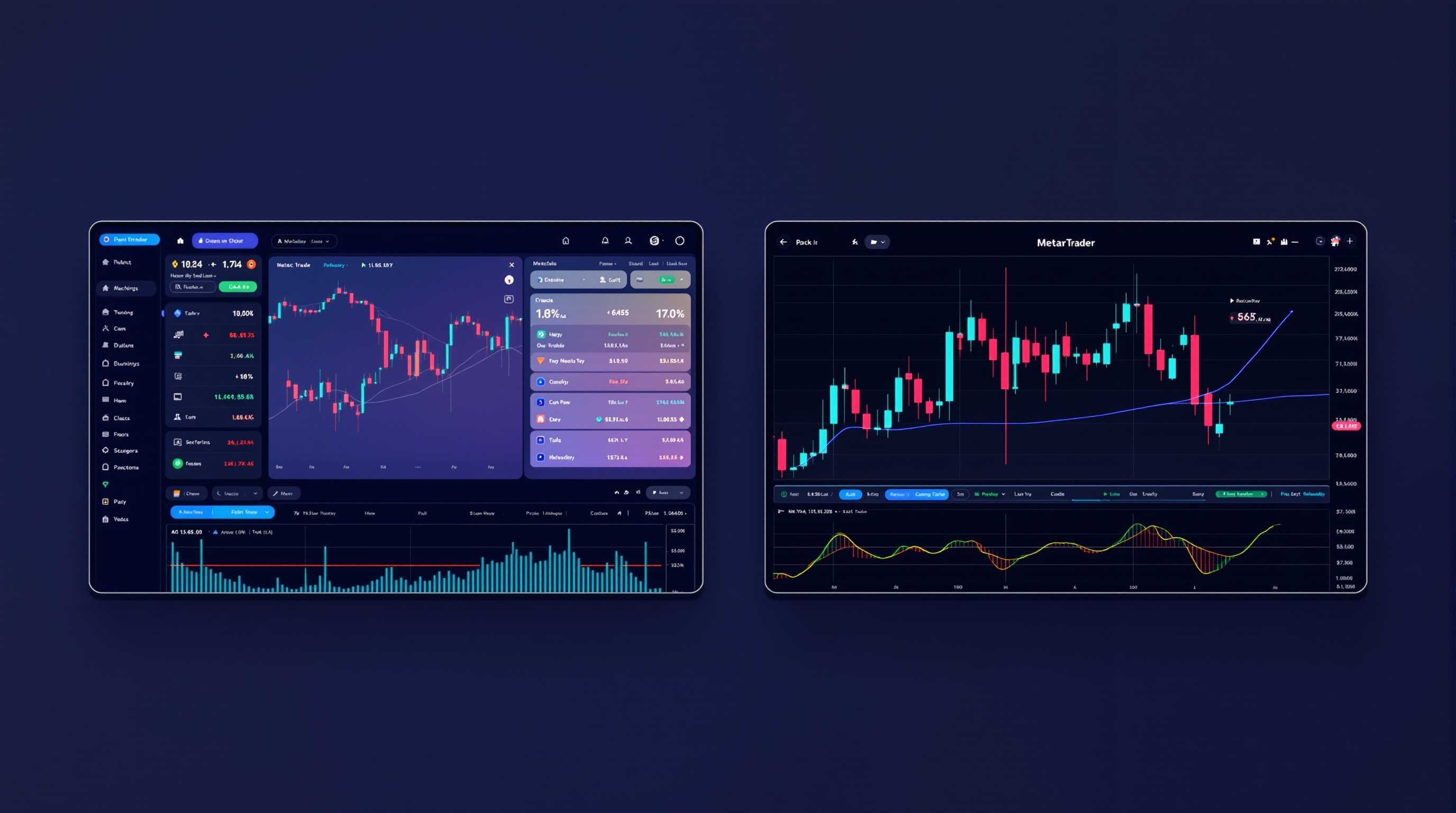
Choosing between the IG platform vs MetaTrader is one of the first practical decisions a UK trader makes, and it shapes everything from your charting workflow to whether you can automate a strategy at all. This guide breaks down what actually differs between them, so you can pick based on how you trade — not on brand familiarity.
IG Platform vs MetaTrader: The Core Difference
The comparison isn't really "which platform is best" — it's "which platform matches your trading style". Here's the fundamental split:
- IG's own platform is a proprietary system built by IG, covering forex, shares, indices, commodities and options in one account and one interface. It's designed for discretionary traders who want breadth of markets and a polished, all-in-one experience.
- MetaTrader (MT4/MT5) is third-party software used by hundreds of brokers worldwide, including many FCA-regulated firms. It's purpose-built for forex and CFD trading, with a huge ecosystem of custom indicators, scripts and Expert Advisors (EAs).
Neither is objectively superior. A trader who scalps five currency pairs with a custom EA will get far more value from MetaTrader. A trader who moves between UK shares, indices and FX within one account may prefer IG's own platform for simplicity.
Importantly, some brokers — IG included at various points — have offered both options, letting you choose per account. Always confirm current availability directly with the broker, since platform line-ups do change over time.
Market Access and Instrument Range
One area where the platforms genuinely diverge is breadth of tradable markets.
- IG's own platform typically gives access to a very wide product range — forex, indices, shares, commodities, options and more — all under one login, which suits traders who diversify across asset classes.
- MetaTrader, by contrast, is primarily aimed at forex and CFD instruments. Coverage depends entirely on what your specific broker lists on that MetaTrader server — it's not a fixed menu.
If your plan is pure FX and CFD trading, this difference may not matter much. If you want to hold UK shares or trade options alongside your forex positions, a broker's own multi-asset platform (like IG's) may be more convenient than juggling separate MetaTrader accounts for different asset types.
Either way, don't assume — check the exact instrument list on your chosen broker's site, since it can change and varies by account type and jurisdiction.
Automated Trading and Expert Advisors
This is often the deciding factor for serious systematic traders.
- MetaTrader supports Expert Advisors written in MQL4 (MT4) or MQL5 (MT5), plus a large marketplace of pre-built indicators and scripts. If you code your own strategies or use third-party EAs, this is the practical standard.
- IG's own platform does not run MT4/MT5 EAs. Some brokers offer API access as an alternative, but that requires more technical setup than dropping an EA into MetaTrader's terminal.
Practical steps if EA support matters to you:
1. Confirm whether your target broker (e.g. IG or Pepperstone) offers a live MetaTrader server, not just a demo. 2. Check whether it's MT4, MT5, or both — they are not interchangeable for EA compatibility. 3. Test your EA on a demo account under real market conditions before going live. 4. Check the broker's policy on VPS hosting for EAs, since uninterrupted connectivity matters for automated strategies.
Execution Model and Cost Comparison
The platform you use doesn't set your trading costs — the broker's execution model and pricing do. This is where traders often get confused: they compare "IG vs MetaTrader" when they should be comparing "Broker A's spreads vs Broker B's spreads," regardless of platform.
Key factors to check, whichever platform you choose:
| Factor | Why it matters | |---|---| | Execution model | Market maker vs STP/ECN affects fill quality and requotes | | Spread type | Fixed vs variable spreads change cost predictability | | Commission structure | Some accounts add a per-lot commission on top of spread | | Overnight swaps | Relevant if you hold positions past the daily rollover | | Slippage on news | Can matter more than the quoted spread during volatility |
Both IG and Pepperstone are FCA-regulated and offer transparent published information, but exact spreads and commissions change and vary by account type. Never rely on a third-party article for live numbers — run your own comparison using PipTax's [cost tool](/audit.html) before opening an account, and cross-check current offerings on the [brokers page](/brokers/index.html).
Charting, Customisation and Ease of Use
Day-to-day usability often comes down to personal preference, but there are structural differences worth knowing:
- MetaTrader offers deep customisation — thousands of free and paid indicators, multiple chart templates, and a scripting language for building your own tools. The interface looks dated to some traders but is functionally powerful.
- IG's own platform tends to offer a more modern, streamlined interface with built-in tools, news feeds and research integrated directly — less setup required, but less scope for deep customisation than MetaTrader's ecosystem.
If you value pre-built polish and integrated fundamentals, IG's own platform may suit you better out of the box. If you want to build a highly customised charting environment with third-party add-ons, MetaTrader's flexibility is hard to match.
Try both on demo accounts for at least a week of real screen time before deciding — a platform that looks good in a screenshot can feel very different once you're placing live orders.
Regulation and Account Safety
Whichever platform you lean towards, regulation should come first, not last, in your decision.
- Both IG and Pepperstone are FCA-regulated, meaning they fall under UK rules including the 30:1 leverage cap on major FX pairs for retail clients.
- FCA regulation also brings segregated client funds and access to the Financial Services Compensation Scheme (FSCS) up to the relevant limit — details worth confirming directly with each broker.
- Regulatory status can change or vary by entity (some brokers operate multiple regulated entities globally) — always verify current permissions on the FCA register before funding an account.
Don't let platform preference override regulatory due diligence. A well-regulated broker offering your preferred platform beats an unregulated one with flashier charts every time.
Making Your Decision
Bringing IG platform vs MetaTrader back to a practical checklist:
- Choose IG's own platform if: you trade multiple asset classes, prefer an integrated modern interface, and don't need EA automation.
- Choose MetaTrader if: you run or plan to run Expert Advisors, want deep charting customisation, or prefer a platform standard supported across many FCA-regulated brokers.
- Either way: confirm current platform availability directly with the broker, verify FCA regulation status, and compare real, live costs — not platform branding — using PipTax's [cost tool](/audit.html), the [methodology](/methodology.html) behind it, and the [brokers directory](/brokers/index.html). New to comparing platforms and costs generally? Our [trading school](/school/index.html) covers the basics before you commit real money.
Trading carries a genuine risk of loss, whichever platform you use — pick the tool that fits your strategy, then verify the costs before you fund an account.
Key takeaways
- IG platform vs MetaTrader isn't about which is 'better' overall — it's about which fits your strategy, automation needs and market access.
- IG's own platform gives you a huge range of markets (shares, indices, forex, options) in one polished interface, while MetaTrader is built specifically for FX/CFD trading with deep EA and indicator support.
- MetaTrader 4 and MetaTrader 5 are different platforms under the hood — confirm which one a broker actually offers before you build a strategy around it.
- Execution model (market maker vs STP/ECN) and all-in cost matter more than the platform logo — check both with PipTax's cost tool before committing.
- Both IG and Pepperstone are FCA-regulated and UK-accessible, but you must verify live spreads, commissions and platform availability directly with them.
- If you run automated strategies or Expert Advisors, MetaTrader is generally the more practical choice; discretionary multi-asset traders often prefer a broker's own platform.
Frequently asked questions
- Is IG's own platform better than MetaTrader for beginners?
- For beginners who want one clean interface covering forex, shares, indices and more, IG's own platform is often easier to start with. MetaTrader has a steeper learning curve but pays off if you plan to use automated strategies or custom indicators. Try both on a demo account before deciding.
- Does IG offer MetaTrader?
- IG has historically supported MetaTrader alongside its own platform, but platform line-ups change. Always confirm current MT4/MT5 availability directly on IG's website or via a quick call to their support team before opening an account for that reason.
- Can I run Expert Advisors (EAs) on IG's own platform?
- No — IG's proprietary platform doesn't run MT4/MT5 Expert Advisors. If automated trading is central to your plan, you need a MetaTrader connection, either through IG's MetaTrader offering (if available) or another FCA-regulated broker such as Pepperstone.
- Is MetaTrader 4 the same as MetaTrader 5?
- No. MT4 and MT5 are separate platforms with different order types, timeframes, programming languages (MQL4 vs MQL5) and, in some cases, different asset coverage. Confirm which version a broker offers — some only provide one, not both.
- Which platform has lower costs, IG or MetaTrader brokers like Pepperstone?
- The platform itself doesn't set the cost — the broker's pricing model does. IG and Pepperstone may offer MetaTrader access with different spread/commission structures. Use PipTax's cost tool to compare all-in costs for your actual trade size and instrument.
- Is IG regulated by the FCA?
- Yes, IG is FCA-regulated, as is Pepperstone. FCA regulation caps retail leverage at 30:1 on major FX pairs, among other protections. Regulation status can change, so double-check current permissions on the FCA register before opening an account.