How to Copy Trade Safely (And What It Really Costs)
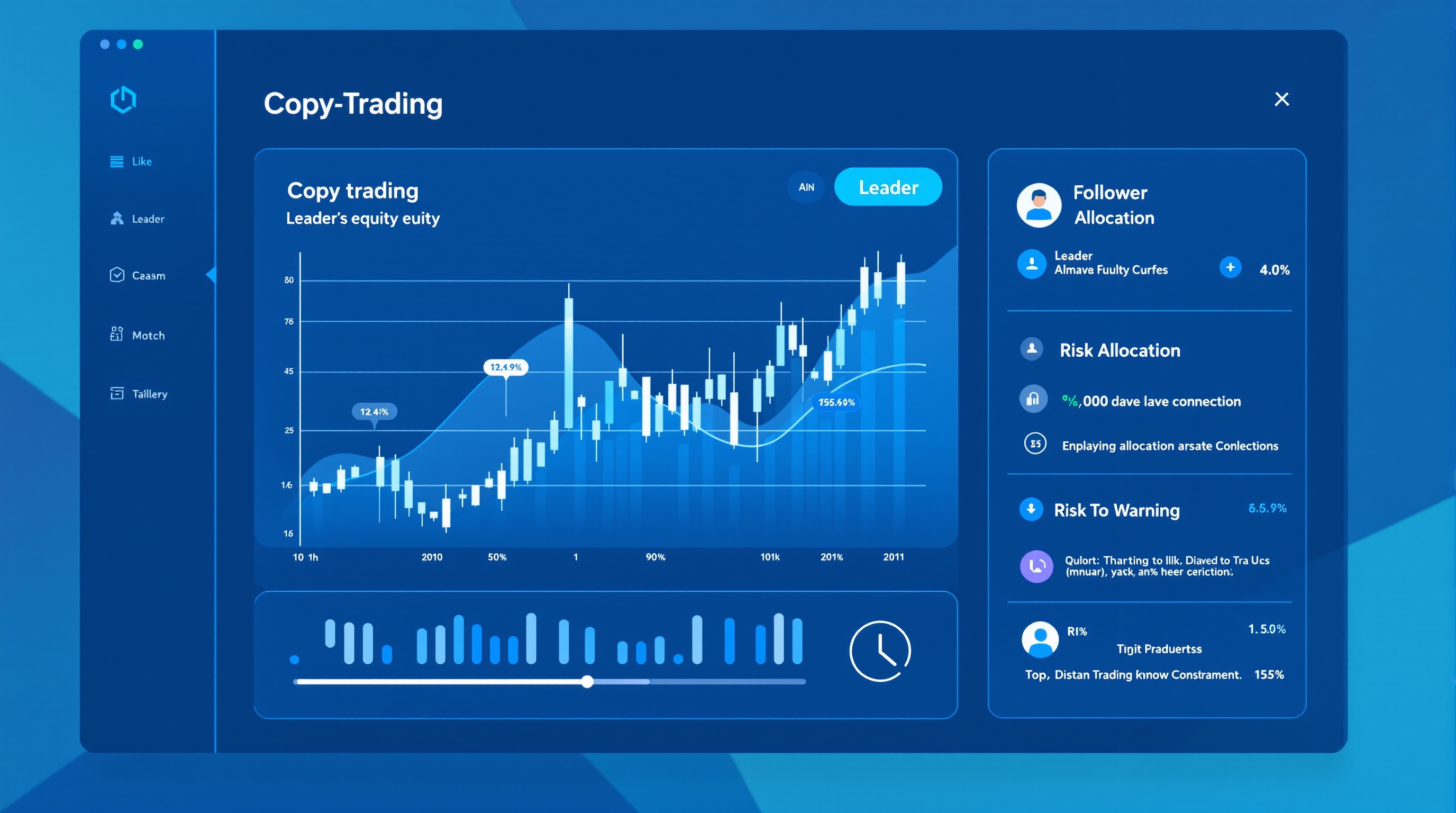
If you want to copy trade safely, you need to treat it like any other trading decision: understand the mechanics, price the real costs, and verify the track record before a single pound of your money moves. Copy trading has grown fast because it promises to outsource the hard part — decision-making — to someone else. It doesn't outsource the risk. That stays with you.
What Copy Trading Actually Is
Copy trading links your brokerage account to a "leader" or "strategy provider," so that when they open or close a position, the same trade (scaled to your account size) happens in yours — usually within seconds, via API or platform integration.
Three common structures:
- Broker-native copy tools — built into the platform (some brokers offer this directly or via MetaTrader's Signals service).
- Third-party platforms — sit on top of your broker account and route trades across many followers at once.
- Manual mirroring — you personally replicate trades from a Telegram/Discord signal by hand, which isn't strictly copy trading but carries similar risks.
What copy trading does not do:
- Guarantee the leader's future results match their past ones
- Remove slippage, spread, or commission from your side of the trade
- Protect you from a leader's bad day, bad month, or account blow-up
You're buying execution of someone else's decisions — with your own money and your own broker's costs attached.
The Real Cost Stack
Every copy trading arrangement has up to four cost layers, and it's easy to only notice one:
| Layer | What it is | Where to check it | |---|---|---| | Broker execution cost | Your spread and/or commission per trade | PipTax's cost tool | | Platform/subscription fee | Monthly or per-trade fee to the copy service | Platform's fee page | | Performance fee | Often 20–30% of profits, charged to the leader (sometimes passed to you) | Provider's terms | | Slippage/lag | Price difference between the leader's fill and yours | Compare timestamps if available |
A leader showing a 15% monthly return on paper can leave you with far less once your own spread, a subscription fee, and copy delay are subtracted — and if the strategy trades frequently, execution costs compound fast. Before connecting any account, run your numbers through PipTax's cost tool at /audit.html using the leader's actual trade frequency and typical position size. High-frequency strategies are the most cost-sensitive because you pay the spread or commission on every single copied trade, win or lose.
How to Vet a Track Record
A track record is only as useful as its verification. Look for:
- Independent timestamping — trades logged server-side by a broker or recognised platform, not a personal spreadsheet or screenshot
- Sample size — ideally 100+ trades across 6+ months minimum; a 3-week hot streak proves nothing
- Disclosed drawdown — maximum drawdown and average drawdown, not just cumulative profit
- Consistency of method — same instruments, same risk per trade, same session times over the period shown
- Losing periods included — a curve with zero flat or red months is a strong sign of cherry-picking or an unsustainable method
Ask the provider directly for a live account statement link (many copy platforms generate one automatically). If they can only offer a PDF or a backtest, that's not a track record — it's a pitch.
Red Flags in Signal Services and Copy Providers
Most retail traders lose money, and no legitimate provider will promise otherwise. Treat these as hard stops:
- Guaranteed or "consistent" monthly returns — markets don't work that way, ever
- No verified live track record, only backtests or screenshots
- Hidden martingale or grid strategies — doubling down after losses can produce a smooth equity curve for months, then one move wipes the account; always ask directly whether position sizing increases after a loss
- Pressure to pay via Telegram, crypto only, or outside the platform — removes your consumer protection entirely
- Vague or absent regulation — the provider or underlying broker isn't traceable to an FCA (or equivalent) register
- Urgency language — "limited spots," "join before the next signal," countdown timers
If two or more of these appear together, walk away regardless of how good the recent numbers look.
Setting Up Safely: A Practical Checklist
Before you connect a live account to any copy service:
1. Confirm your broker's regulation and copy-trading terms — check Pepperstone's or IG's own documentation, or compare options on /brokers/index.html 2. Price the full cost stack using /audit.html with realistic trade frequency and size 3. Start with a demo or minimum allocation for at least one full month before scaling up 4. Set a hard drawdown limit on the copy relationship — a stop-loss on the *strategy*, not just individual trades 5. Review weekly, not daily — copy trading isn't a set-and-forget product 6. Understand withdrawal terms — some platforms lock funds during open copied positions
Treat the first month as an audit period, not a profit period.
Copy Trade Safely: The Bottom Line
To copy trade safely, separate the marketing from the mechanics: verify the track record independently, price every cost layer through a tool like PipTax's /audit.html, and walk away from anything showing guaranteed returns or hidden martingale sizing. Copy trading can be a useful way to observe live strategy execution, but it doesn't change the maths of trading — costs still compound, drawdowns still happen, and most retail accounts still lose money over time. If you're new to the mechanics of spreads, commissions, and execution quality, the /school/index.html section is a solid place to build that foundation before connecting any live account to someone else's trades.
Key takeaways
- Copy trading only mirrors a strategy's entries and exits — it doesn't remove market risk, drawdown, or the chance of losing money
- Your real return is the leader's gross performance minus platform fees, spread/commission costs, slippage, and any performance fee — audit all four before committing capital
- A genuine track record is independently verified (broker-side or via a recognised platform), spans a meaningful sample size, and shows drawdown, not just profit
- Martingale and grid-style 'signal services' can show a smooth equity curve for months before one large loss wipes the account — check the method, not just the chart
- Guaranteed returns, no visible drawdown, and pressure to pay via Telegram/crypto are the clearest red flags of an unregulated or dishonest provider
- Run the numbers on execution costs at your own broker using PipTax's cost tool before and after adding any copy trading arrangement
Frequently asked questions
- Is copy trading safe for beginners?
- It can be a reasonable way to observe a strategy in action, but it is not risk-free. You're still exposed to full market risk, the leader's drawdowns become your drawdowns, and technical issues (slippage, delayed copying) can widen the gap between their results and yours. Beginners should treat it as education plus small, controlled exposure — not a shortcut to skip learning risk management.
- How much does copy trading actually cost?
- Costs usually stack in layers: your broker's spread or commission, a platform or subscription fee for the copy service, sometimes a performance fee (often 20–30% of profits), and slippage from copying delays. None of these are fixed industry-wide, so check your own broker's live pricing via PipTax's cost tool and read the copy platform's fee schedule before connecting funds.
- What's the difference between copy trading and signals?
- Copy trading automatically replicates a leader's trades in your account in real time. Signals are manual alerts (entry, stop, target) you act on yourself, usually via Telegram, email, or an app. Signals give you control over execution and sizing but require you to act fast and correctly; copy trading removes that friction but hands over more control.
- How do I check if a trading track record is real?
- Look for verification through a recognised copy trading platform (which timestamps trades server-side) or a broker-audited statement — not a screenshot or a third-party "verified" badge with no link back to source data. Check the sample size (ideally 100+ trades over 6+ months), whether maximum drawdown is disclosed, and whether the equity curve includes any flat or losing periods, since a curve with none is a red flag.
- Can I copy trade with Pepperstone or IG?
- Pepperstone supports copy trading through third-party platforms and MetaTrader signal services, while IG offers its own social/copy features depending on region and account type. Availability and fee structures change, so check each broker's current terms directly and compare live spread and commission data on PipTax's brokers page before choosing where to connect a copy account.