How to Evaluate a Forex Signal Service: The Red Flags
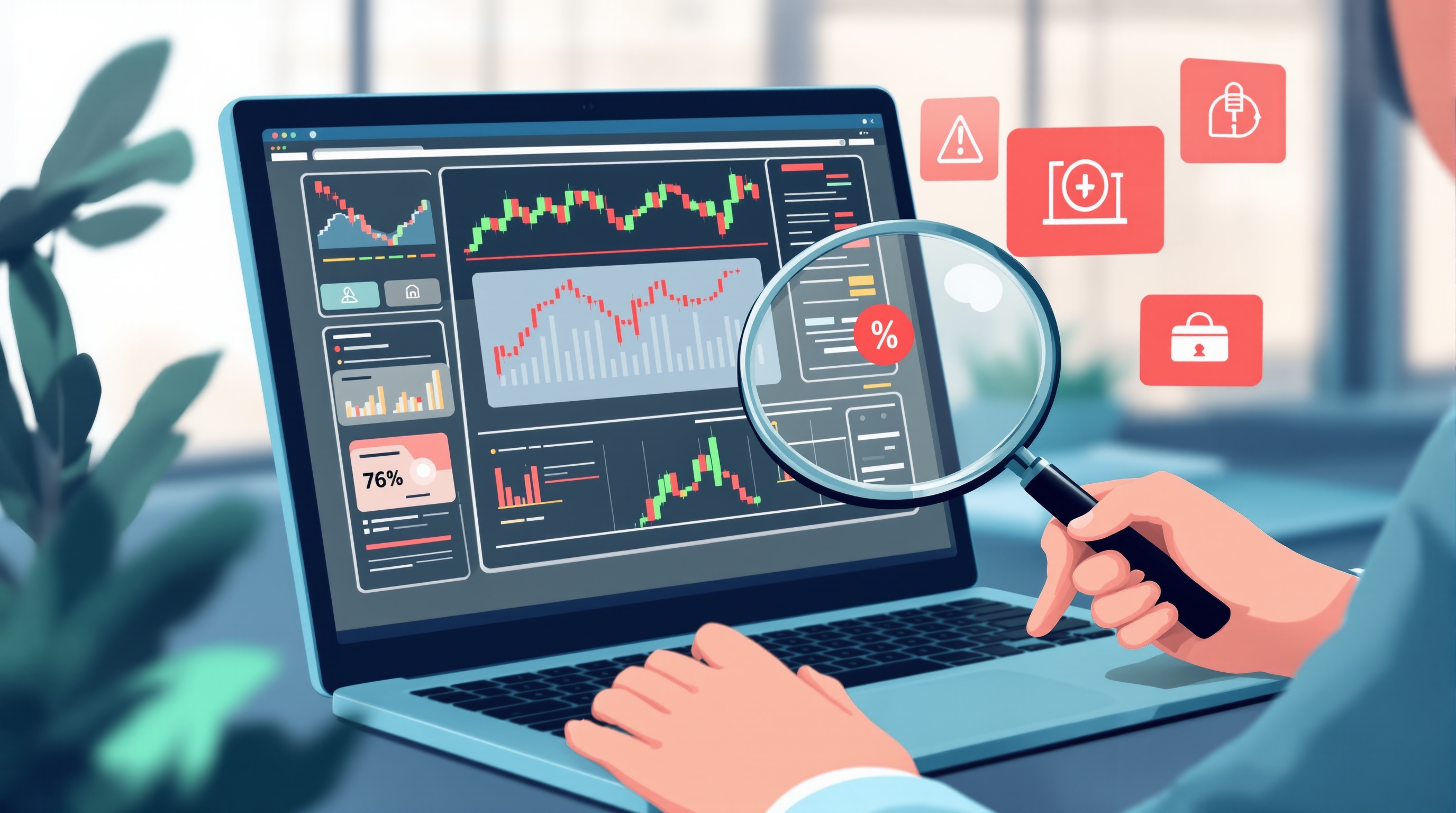
If you're going to evaluate a forex signal service before paying for it or copying its trades, you need a checklist that goes beyond "does it look professional." Most retail forex traders lose money, and a slick website or a busy Telegram group doesn't change that arithmetic — so the real job is separating genuine, verifiable skill from marketing dressed up as an edge.
What a Forex Signal Service Actually Is
A signal service sends buy/sell alerts — entry, stop loss, take profit — that you execute yourself or via a copy-trading link. Some are run by individual traders, others by teams claiming institutional experience. The business model varies:
- Subscription fees — flat monthly or annual charge regardless of performance
- Profit-share or commission — the provider takes a cut of gains, sometimes via an introducing broker arrangement
- Free-with-upsell — free signals used to funnel you into a paid course, VIP group, or a specific broker
None of these models are inherently dishonest, but each creates an incentive that isn't always aligned with your account growing. A subscription provider gets paid whether you win or lose. An introducing-broker arrangement can mean the signals are secondary to getting you to open and fund an account. Understanding the incentive is step one in any real evaluation.
The Core Red Flags to Evaluate a Forex Signal Service
When you sit down to evaluate a forex signal service, run it against this list. Any single item is a caution; two or more should be a hard stop.
- Guaranteed returns or "risk-free" language — no honest provider can promise a percentage return, because markets don't work that way
- No verifiable track record — only screenshots, cherry-picked trades, or a "trust us" statement
- Vague or hidden strategy — they won't explain whether it's trend-following, news-based, or grid/martingale
- Pressure tactics — countdown timers, "only 10 spots left," or testimonials that can't be checked
- Unrealistic win rate with no losing trades shown — every real strategy has losers; hiding them is a tell
- Requirement to use a specific unregulated broker — a major warning sign, since it can point to an IB kickback scheme rather than genuine trading skill
Verifying the Track Record Properly
A track record only means something if it's independently verifiable. Look for:
1. A live-linked account on a platform like MyFXBook or FX Blue, connected directly to a real trading account rather than a manually updated spreadsheet 2. History length — at least 6–12 months, ideally covering different market conditions (trending, ranging, high-volatility news events) 3. Drawdown data — the maximum peak-to-trough decline should be clearly stated; if it's not shown, ask for it directly 4. Consistency between signals and results — do the trade timestamps match what was actually alerted, or does the record only show a subset of "best" trades?
If a provider refuses to show verified, third-party-hosted results, treat that refusal itself as the answer. Genuine track records are something providers want to show off, not hide behind vague claims.
Martingale and Hidden Position-Sizing Risk
One of the sneakier red flags is a strategy that looks brilliant on a short track record because it's quietly using martingale or grid position-sizing — increasing trade size after a loss to recover faster. This can produce months of small, steady wins that mask a genuine tail risk: one extended losing streak, and the account is wiped out in a single event.
Ask directly:
- Is position size fixed as a percentage of the account, or does it increase after losses?
- What's the maximum number of simultaneous open positions or "legs" in a losing sequence?
- What was the worst historical drawdown, and how long did recovery take?
If the answers are evasive, or the provider says position sizing is "proprietary," assume the worst-case risk profile until proven otherwise. A strategy's real risk isn't in its average win — it's in its worst possible sequence.
Telegram Hype and Social Proof Tricks
Paid Telegram and Discord groups are a common distribution channel for signals, and the format itself encourages hype: constant "WIN" screenshots, urgency around joining before a "big move," and testimonials that can't be traced back to real people. None of this is proof of a durable edge.
Watch for:
- Selective posting — only winning trades shared publicly, losses quietly deleted or omitted
- Fake urgency — "price goes up at midnight" or artificial scarcity on membership spots
- Unverifiable testimonials — screenshots of chat messages with no way to confirm they're genuine subscribers
- Affiliate-driven recommendations — the provider earns a commission for every trader who signs up with their "recommended" broker
None of this proves malice on its own, but a legitimate provider should be comfortable answering direct questions about strategy and risk without dodging or pressuring you into an immediate decision.
Cost and Execution Still Decide the Outcome
Even genuinely good signals can turn unprofitable once real-world costs are applied. Spreads, commission, and slippage all eat into the edge a signal service claims to have, and this is where many traders lose the thread — they focus entirely on signal accuracy and ignore execution quality.
Before copying any signal service, run the actual pairs and timeframes through PipTax's [cost tool](/audit.html) to see how spread and commission stack up on your account type. Compare regulated brokers like Pepperstone and IG — both offer MetaTrader and their own platforms with different spread/commission structures — via the [brokers directory](/brokers/index.html), and check our [methodology](/methodology.html) for how we calculate real trading costs. A signal that's profitable on paper can go negative once you factor in a wide spread or poor fill during news events.
Conclusion: A Practical Checklist to Evaluate a Forex Signal Service
To properly evaluate a forex signal service, treat it like due diligence on any financial product, not a leap of faith. Demand a verified, third-party-hosted track record with drawdown data, ask directly about position-sizing and martingale risk, and be sceptical of any group relying on urgency or unverifiable testimonials rather than transparent numbers. Then close the loop by checking your own execution costs — because even a legitimate edge can be erased by a poor broker choice. Start with the [PipTax school](/school/index.html) if you want to understand strategy fundamentals before paying anyone for signals, and always remember that trading carries real risk of loss regardless of who's sending the alerts.
Key takeaways
- Most retail traders lose money, so treat any signal service claiming consistent profits with heavy scepticism
- A genuine track record is independently verified (MyFXBook, FX Blue, or broker statements) — screenshots alone prove nothing
- Hidden martingale or grid position-sizing can make a signal service look great until one losing streak wipes the account
- Paid Telegram groups pushing urgency, fake testimonials, or 'limited spots' are marketing tactics, not trading edge
- Execution and cost still matter even with good signals — check spreads, slippage and commission via PipTax's cost tool before copying any trade
- Ask for the strategy logic, drawdown history, and risk-per-trade rules before paying for or following any signal provider
Frequently asked questions
- Can a forex signal service really guarantee profits?
- No. No legitimate provider can guarantee profits because currency markets are unpredictable and most retail traders lose money over time. Any service using the word 'guaranteed' alongside returns is a red flag, not a selling point.
- What's the best way to verify a signal provider's track record?
- Look for a live, independently hosted verification such as MyFXBook or FX Blue linked directly to a real trading account, not just a spreadsheet or screenshots. Check the history spans several months and includes losing periods, since a track record with no drawdowns is unrealistic.
- Why is martingale risky if the signals seem to win most of the time?
- Martingale and grid systems increase position size after losses to recover faster, which can produce a long string of small wins that hides a catastrophic tail risk. One extended losing streak can blow the account, so always ask directly whether a service uses averaging-down or fixed position sizing.
- Do I still need to worry about broker costs if I'm copying signals?
- Yes. Spreads, commissions and slippage eat into signal performance just as much as your own trading, and a profitable-looking signal can turn negative after real-world execution costs. Run the pairs and account type through PipTax's cost tool at /audit.html before committing capital.
- Are paid Telegram or Discord signal groups automatically a scam?
- Not automatically, but paid groups that rely on urgency, fake testimonials, or refuse to show verified results deserve extra scrutiny. A legitimate provider should be comfortable answering questions about strategy, risk management and drawdown without pressuring you to subscribe immediately.
- Should I use the same broker as the signal provider?
- Not necessarily — what matters is that your own broker offers competitive execution for the pairs and timeframes the signals cover. Compare regulated brokers such as Pepperstone and IG on the PipTax brokers page and confirm costs with the audit tool rather than assuming the provider's broker is best for you.