Breakout Trading Systems Explained: A Practical Guide
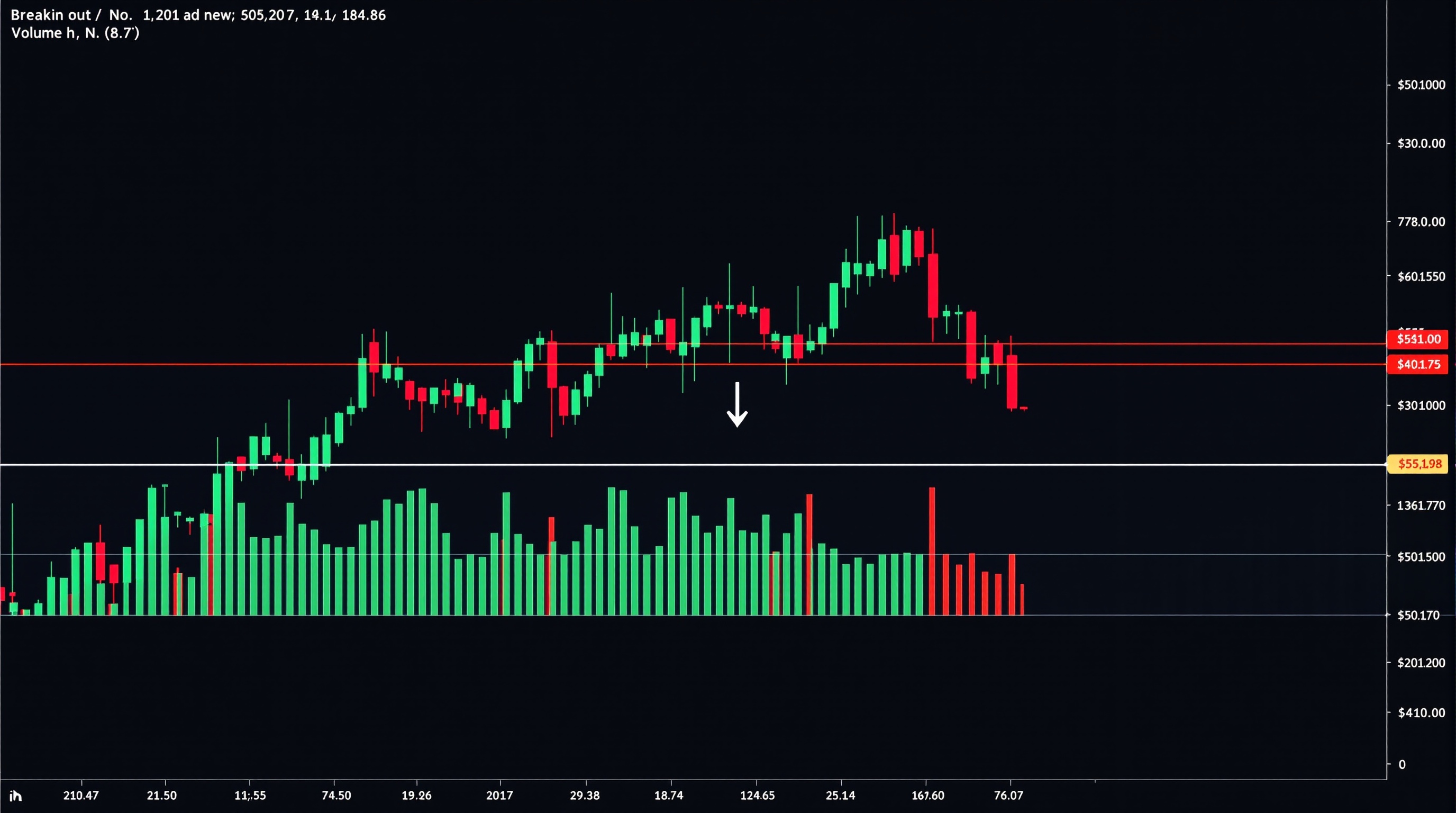
Breakout trading systems are built on a simple idea: price that pushes through a well-established support or resistance level tends to keep moving in that direction, at least for a while. That simplicity is exactly why the approach attracts so many retail traders — and why so many of them lose money doing it badly. This guide explains how breakout systems actually work, how to build a rules-based version you can test, and how to tell a genuine signal service from a Telegram hype channel.
How breakout trading systems work
A breakout system trades the moment price moves outside a defined range, on the assumption that the move will continue rather than reverse. The mechanics are usually built from three parts:
- A range definition — a horizontal support/resistance zone, a consolidation box, an opening range, or a volatility band like Bollinger Bands or an ATR channel.
- A trigger — price closing beyond the range, or a break intraday with confirmation on the next candle.
- A management plan — where the stop goes (usually just inside the old range), and how the target or trailing stop is set.
Common variants include:
1. Range breakouts — trading the break of a multi-day or multi-week high/low. 2. Opening range breakouts — using the first 15–60 minutes of a session to define the range, then trading breaks of it. 3. Volatility breakouts — entering when a volatility measure (ATR, Bollinger width) expands sharply from a squeeze. 4. News/event breakouts — trading the initial spike after high-impact data, though slippage and spreads widen sharply here.
None of these are inherently "good" or "bad" — they're just different ways of defining the same core bet: momentum continuation over mean reversion.
Why false breakouts happen — and how to filter them
The single biggest problem with breakout trading is the false breakout: price pokes through the level, triggers entries, then snaps back and stops everyone out. This isn't bad luck — it's structural. Levels attract resting orders, and liquidity providers and larger players often know exactly where retail stops cluster.
Ways traders try to filter false breaks:
- Require a close beyond the level, not just a wick through it.
- Wait for a retest of the broken level before entering, sacrificing some of the move for confirmation.
- Check volume or volatility expansion alongside the price break — a breakout on dead volume is weaker.
- Avoid breakouts right before major news — a level can break simply because the market is thin, not because of genuine conviction.
- Use a buffer beyond the level (a few pips or a percentage of ATR) rather than trading the exact price.
None of these filters eliminate false breakouts entirely. They reduce frequency at the cost of some entries — that trade-off is the core design decision in any breakout system, and it's why backtesting your specific rules matters more than reading someone else's opinion of "the best" breakout strategy.
Building and testing your own system
A breakout system only becomes useful once it's written down as explicit, testable rules — not a vague feeling that "this level looks strong". At minimum, define:
- Instrument and session — breakouts behave differently on GBP/USD during London hours versus a quiet Asian session.
- Exact range definition — how many bars, what timeframe, what counts as the high/low.
- Entry trigger — close beyond level, break-and-retest, or intrabar with confirmation.
- Stop placement — typically just beyond the opposite side of the range.
- Exit rule — fixed reward multiple, trailing stop, or time-based exit.
- Position sizing — a fixed percentage of account risk per trade, not a fixed lot size.
Once defined, backtest on historical data across multiple market conditions — trending and ranging — and forward test on a demo account before risking real money. Keep a trade log recording win rate, average win/loss, and maximum drawdown. Most breakout systems have a modest win rate (often below 50%) and rely on winners being meaningfully larger than losers — so know your expectancy before you trust the system with live capital.
Costs quietly decide whether a breakout system works
Breakout trades often have wider stops and get entered right as volatility expands — exactly when spreads can widen too. A system that looks profitable on paper can turn marginal, or negative, once realistic costs are included. Before trading any breakout strategy live:
- Check the typical and news-time spread on your instrument, not just the quoted minimum.
- Factor in commission if you're on a raw-spread account.
- Account for slippage on stop and market orders during fast moves — very common right after a breakout trigger.
- Compare execution across brokers using PipTax's [cost audit tool](/audit.html), which lets you see how spread and commission structures stack up for the pairs and sessions you actually trade.
For example, Pepperstone and IG both publish their own spread and commission schedules, and both offer MetaTrader alongside their own platforms — but the *effective* cost of a breakout entry depends on the specific account type, instrument, and time of day. Never assume a headline spread applies at the exact moment your breakout triggers; check current details on the [brokers page](/brokers/index.html) and run the numbers through the cost tool before committing size.
Evaluating a breakout signal service
Plenty of services sell breakout "signals" or fully automated breakout bots. Some are run honestly; many are not. Before paying for or following any signal service, check:
- Verified track record — third-party verified (e.g. via a broker's official statement or a recognised verification service), not a screenshot of an equity curve.
- Drawdown disclosure — a service that only shows profit, never maximum drawdown, is hiding the risk side of the ledger.
- Trade logic transparency — can they explain the breakout rules, at least in general terms, or is it a "black box you just trust"?
- Realistic win rate and reward-to-risk — figures that sound too smooth (90%+ win rate, no losing months) are a warning sign, not a selling point.
- How they make money — from a subscription fee, or from steering you to a specific broker via affiliate links? Both can be legitimate, but the incentive matters.
Red flags to walk away from
Some warning signs are close to disqualifying on their own:
| Red flag | Why it matters | |---|---| | "Guaranteed" returns or "no-loss" system | No legitimate trading system can guarantee profit — markets are probabilistic | | No verified, independently checkable track record | Screenshots and testimonials are easy to fake | | Hidden martingale or grid recovery logic | Doubling down after losses can look profitable for months, then blow an account in one move | | Paid Telegram groups with countdown-timer urgency | Scarcity pressure is a sales tactic, not a trading edge | | Refusal to disclose drawdown or losing periods | If they hide the downside, assume it's worse than shown | | Pressure to deposit with a specific unregulated broker | A legitimate educator has no reason to insist on one broker |
If a service ticks two or more of these boxes, treat it as entertainment, not a trading plan.
Conclusion: treat breakout trading systems as a process, not a shortcut
Breakout trading systems can work, but only when the rules are explicit, backtested honestly, and costed realistically — most retail traders who try breakout strategies still lose money, usually because they skip the testing stage or ignore execution costs. Before trading any breakout system live, write your rules down, forward test them, run your actual instruments through the [cost audit tool](/audit.html), and treat any paid signal service to the same scrutiny you'd apply to your own strategy. There's no shortcut that replaces that process — and trading always carries risk of loss.
Key takeaways
- Breakout systems bet that price closing beyond a defined range will keep moving, but false breakouts are common and structural, not just bad luck.
- A usable breakout system needs explicit, written rules for range definition, entry trigger, stop, exit and position sizing before it's traded live.
- Spreads often widen and slippage increases right as breakouts trigger, so realistic cost checks via the PipTax cost tool matter as much as the strategy rules.
- Compare execution across brokers like Pepperstone and IG for your specific pairs and sessions rather than relying on headline spreads.
- Red flags in signal services include guaranteed returns, no verified track record, hidden martingale/grid logic, and paid Telegram urgency tactics.
- Most retail traders lose money regardless of strategy type, so breakout trading should be tested and costed, never treated as a guaranteed shortcut.
Frequently asked questions
- What is a breakout in forex trading?
- A breakout is when price moves beyond a defined support or resistance level, or beyond a volatility range, with the expectation that the move will continue in that direction rather than reverse.
- Are breakout trading systems profitable?
- They can be, but there's no guarantee. Profitability depends on the specific rules, the market and session traded, realistic backtesting, and whether spreads, commission and slippage are accounted for. Most retail traders using any strategy, including breakouts, lose money.
- How do I avoid false breakouts?
- Common filters include requiring a candle close beyond the level rather than just a wick, waiting for a retest before entering, checking for volume or volatility expansion, and avoiding entries right before major news releases. None of these eliminate false breakouts completely.
- How can I tell if a breakout signal service is legitimate?
- Look for an independently verified track record, honest disclosure of drawdowns and losing periods, transparency about the trading logic, and no pressure to deposit with a specific broker. Avoid services promising guaranteed returns or hiding losing periods.
- Does broker choice affect breakout trading results?
- Yes. Spreads often widen right as a breakout triggers, and slippage on stop or market orders is common during fast moves. Comparing execution costs across brokers such as Pepperstone and IG using a dedicated cost tool helps you see the real impact on a breakout strategy.
- What is martingale and why is it dangerous in a breakout system?
- Martingale means increasing position size after a loss to try to recover it in one winning trade. It can look profitable for a long stretch, but a single extended losing streak can wipe out an account, which is why hidden martingale logic in a signal service or EA is a serious red flag.